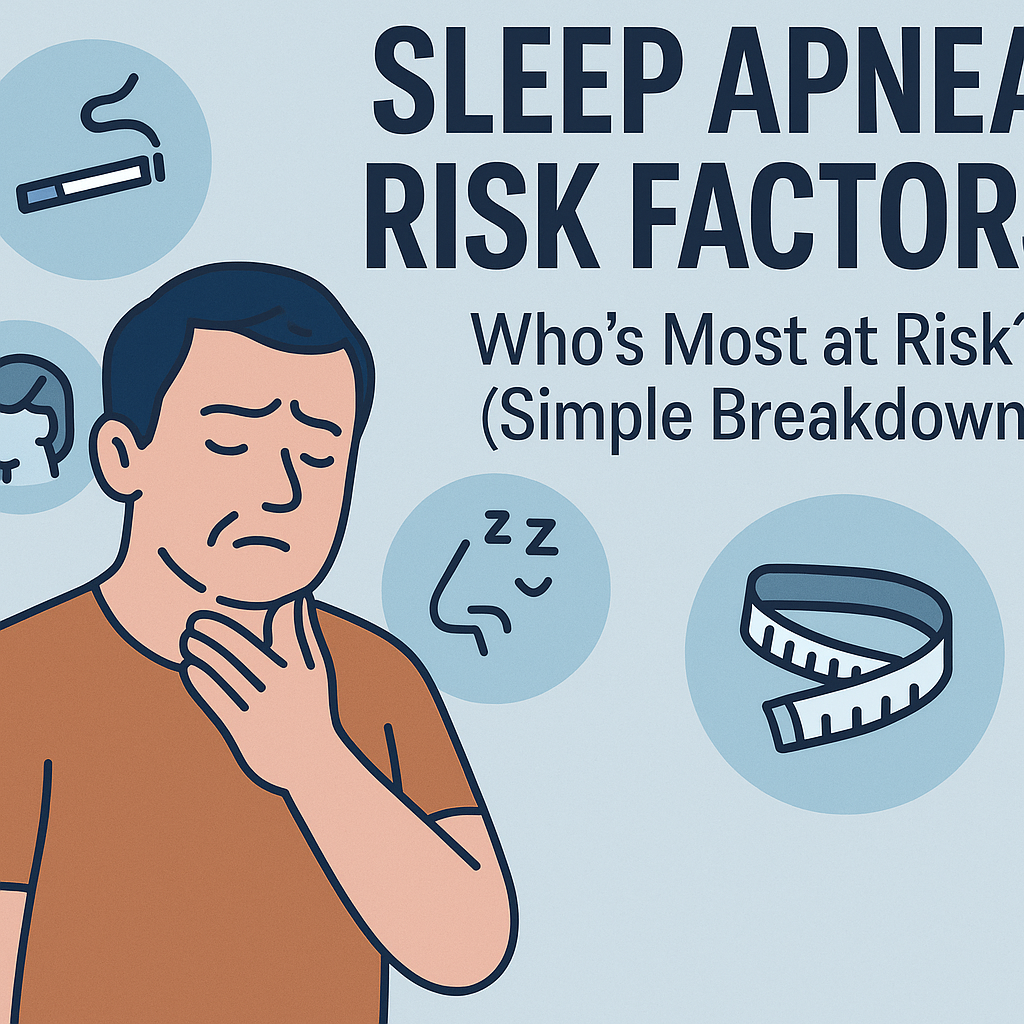
Sleep Apnea Risk Factors
Sleep apnea doesn’t happen randomly — certain factors make it much more likely. Some you can change, others you can’t, but understanding your risks helps you catch symptoms earlier and take action sooner.
Here are the most important risk factors to know.
⭐ Age, Weight & Physical Factors
1. Age 40 or Older
Sleep apnea becomes much more common after age 40 due to natural muscle changes in the throat and airway.
2. Excess Weight
Extra tissue around the neck and airway increases the chances of nighttime obstruction.
3. Large Neck Size
Neck circumference larger than 17 inches (men) or 16 inches (women) increases the likelihood of apnea.
4. Narrow Airway or Small Jaw
Some people are simply born with a smaller airway, increasing the risk even if they’re not overweight.
⭐ Lifestyle & Habits
1. Alcohol Use
Alcohol relaxes throat muscles, making airway collapse more likely.
2. Smoking
Smoking irritates airway tissues and increases swelling, which reduces airflow.
3. Sleeping on Your Back
Gravity pushes the tongue and soft tissues backward, blocking the airway more easily.
⭐ Medical Conditions That Increase Risk
1. High Blood Pressure
Sleep apnea and hypertension often occur together — each can make the other worse.
2. Diabetes (Especially Type 2)
People with insulin resistance or diabetes are more likely to develop sleep apnea.
3. Nasal Congestion or Chronic Sinus Issues
Makes it harder to breathe through the nose, especially at night.
4. Hormonal Conditions
Low thyroid function and PCOS (polycystic ovary syndrome) both increase apnea risk.
⭐ Genetics & Family History
If a parent or sibling has sleep apnea, your chances of having it are significantly higher — even if you’re a healthy weight.
This is often due to inherited traits like jaw structure, nasal passage size, or airway shape.
⭐ Signs Your Risk Is Higher Than You Think
- You snore loudly or frequently
- You choke or gasp at night
- You wake unrefreshed even after 7–9 hours
- Your partner notices pauses in your breathing
- You wake with headaches, dry mouth, or foggy thinking
Use the 3-Minute Sleep Apnea Self-Check to identify your most important warning signs.
- Quick symptom checklist
- Helps estimate risk level
- No medical knowledge needed
⭐ What to Do If You Have These Risk Factors
1. Track Your Symptoms
Use the Self-Check PDF to keep notes and identify patterns.
2. Consider a Home Sleep Test
Easy, accurate, and now the most common way people are diagnosed.
3. Explore Treatment Options
Treatments range from CPAP to oral appliances to lifestyle changes — many people see improvements quickly.