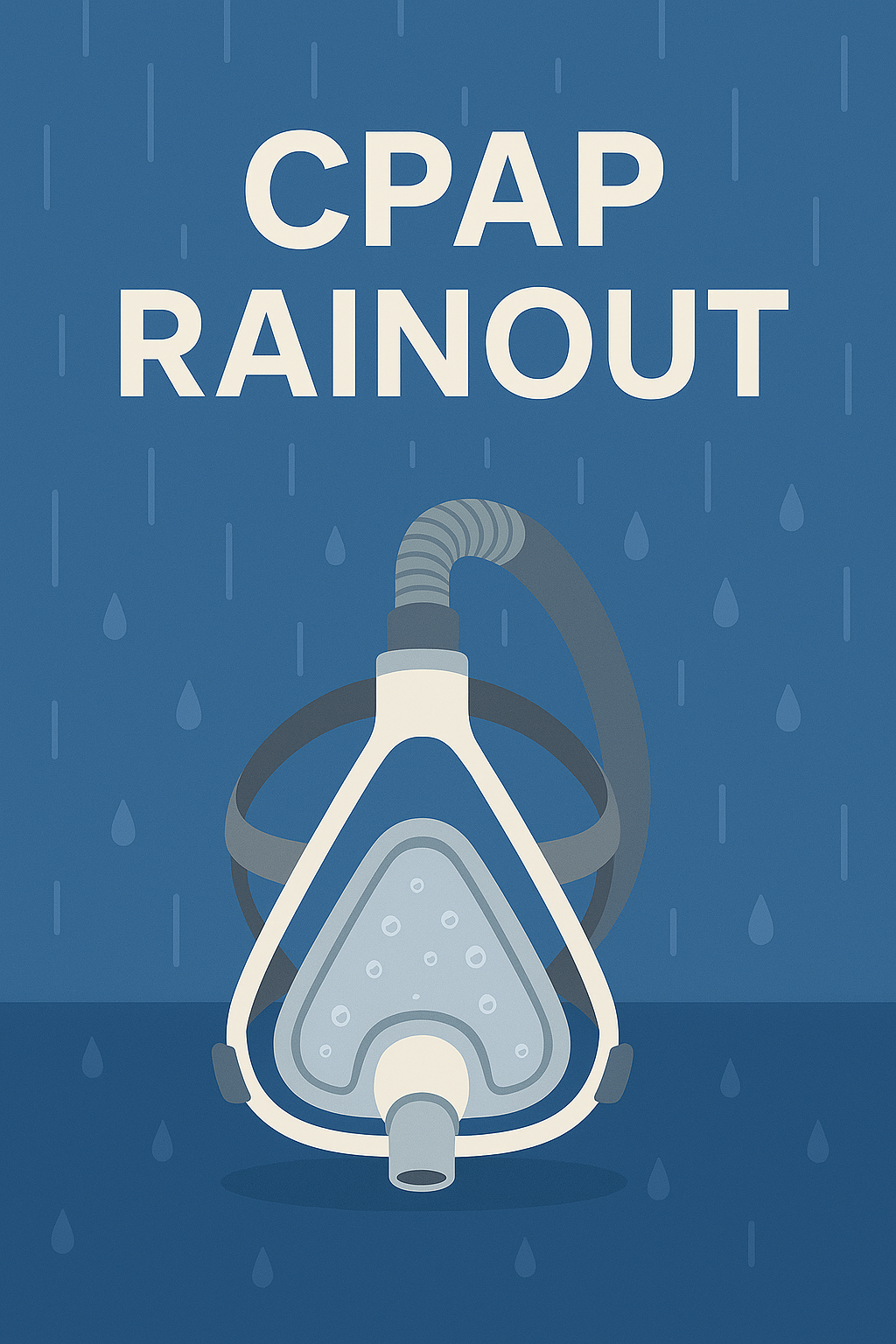
CPAP Rainout (Water in the Hose): Causes & Fast Fixes
NightlyCalm.com is a participant in the Amazon Services LLC Associates Program, an affiliate advertising program designed to provide a means for sites to earn fees by linking to Amazon.com. As an Amazon Associate, I earn from qualifying purchases.
CPAP rainout — the annoying splash of water inside your hose or mask — is one of the most common beginner CPAP problems. It happens when warm, humid air cools too quickly inside the tubing, creating condensation that eventually reaches your mask.
The good news? CPAP rainout is easy to fix. In this guide, you’ll learn why rainout happens, how to stop it instantly, and the simple adjustments that keep your CPAP mask dry all night.
If you’ve ever heard water splashing inside your CPAP hose or felt cold droplets hit your face at night, you’ve experienced rainout. It’s one of the most common beginner frustrations — but also one of the easiest to fix.
This guide explains what causes rainout and the simple ways to stop it for good.
Related CPAP Guides:
⭐ What Is CPAP Rainout?
Rainout happens when warm, humid air from your CPAP travels through a hose that becomes too cold. The temperature difference causes water droplets to form inside the tubing — similar to condensation on a cold drink.
As water builds up, it can pool, gurgle, or splash directly into your mask.
⭐ What Causes CPAP Rainout?
Rainout typically happens because:
- Humidity is set too high
- Your bedroom is too cool
- Your hose hangs below your mask, allowing water to flow downward
- You’re not using heated tubing
- Your hose is routed awkwardly or is too long
Fortunately, each of these is easy to solve.
⭐ 1. Lower Your CPAP Humidity Setting
If your humidifier adds more moisture than the air can hold, condensation forms inside the hose.
Fix:
Reduce humidity by 1–2 levels, then test overnight.
Avoid turning humidity too low — dry air can irritate the nose and mouth.
⭐ 2. Use Heated Tubing (Most Effective Fix)
Heated CPAP hoses maintain warm air all the way to your mask, preventing condensation.
Benefits of heated tubing:
- Prevents rainout completely
- Keeps airflow warm and comfortable
- Helps reduce dryness and sore throats
⭐ 3. Raise the Hose Above Your Head
If the hose dips lower than your mask, gravity pulls water downward — straight into the cushion.
Fix:
Use a hose lift or stand to keep the tubing elevated and angled away from your face.
⭐ 4. Warm Up the Bedroom Slightly
A cold room cools the hose faster, which increases condensation.
Fix:
Raise the room temperature by 1–2 degrees, or insulate the hose by keeping it under the blanket.
⭐ 5. Use a Hose Cover for Insulation
Hose covers add warmth and prevent cold spots — especially helpful in cool climates or winter months.
To avoid water flowing into your mask:
- Route the hose upward first, then down into the mask
- Use clips to secure the hose above shoulder level
- Keep extra tubing from dragging off the edge of the bed
Proper routing minimizes pooling and reduces rainout dramatically.
⭐ 7. Avoid Overfilling the Humidifier
Too much water in the chamber increases the chance of pooling and splashing.
Fix:
Fill only to the maximum line recommended by the machine.
⭐ Summary: How to Stop CPAP Rainout Fast
-
- Lower humidity slightly
- Use heated tubing (most effective solution)
- Raise the hose above your head
More CPAP Help
If you’re struggling with CPAP comfort, these guides can help you fix the most common issues:
- Warm the bedroom a bit
- Use a hose cover for insulation
- Ensure the hose doesn’t dip downward
⭐ Final Thoughts
CPAP rainout is annoying — but completely preventable. With heated tubing, better hose routing, and simple humidity adjustments, you can eliminate water buildup and sleep comfortably through the night.
⭐ Explore More Beginner CPAP Guides
- How to Stop CPAP Mask Leaks at Night
- Best CPAP Pillows for Side Sleepers
- CPAP Dry Mouth: Causes & Fixes
- Best CPAP Hose Management Tools
⭐ CPAP Rainout – FAQ Section (SEO-Optimized)
Struggling with CPAP comfort?These guides can help:
1. What is CPAP rainout?
Rainout happens when warm, humid CPAP air travels through a hose that becomes too cold. The temperature difference causes moisture to condense inside the hose, creating droplets that splash into your mask.
2. Why does my CPAP hose fill with water?
Water collects in the hose when humidity is set too high, the room is cold, or the hose is positioned lower than the mask. These conditions increase condensation.
3. How do I stop water from splashing into my CPAP mask?
You can prevent splashes by lowering humidity, using heated tubing, raising the hose above your head, warming your bedroom slightly, or adding a hose cover for insulation.
4. Does heated tubing really stop rainout?
Yes — heated tubing is the most effective solution. It keeps the air warm from the humidifier all the way to your mask, which prevents condensation from forming.
5. Why does rainout happen more in winter?
Colder bedroom temperatures cool the hose faster, causing more rapid condensation. Using heated tubing or a hose cover helps balance the temperature.
6. Should I turn humidity all the way down to prevent rainout?
No — humidity that is too low can cause dry mouth, dry nose, or congestion. Reduce humidity gradually (1–2 levels) until the issue improves.
7. Does hose routing affect CPAP rainout?
Absolutely. If your hose dips lower than your mask, gravity pulls water into the mask. Keeping the hose elevated prevents pooling and splashing.
8. Can overfilling the humidifier cause rainout?
Yes. Adding too much water increases the likelihood of moisture entering your hose. Always fill only to the manufacturer’s recommended line.
Need More CPAP Tips?
Explore more guides to improve comfort, reduce leaks, and sleep better:
CPAP Rainout FAQ
What causes CPAP rainout?
Rainout happens when warm, humid air from your CPAP travels through a hose that becomes colder than the air inside it. This causes condensation, which eventually collects and splashes into the mask.
How do I stop CPAP rainout quickly?
The fastest fixes include lowering humidity by 1–2 levels, using heated tubing, raising the hose above your head, and warming the bedroom slightly.
Does heated tubing prevent CPAP rainout?
Yes. Heated tubing is the most effective solution because it keeps the temperature consistent from machine to mask, preventing condensation inside the hose.
Why am I getting water in my CPAP mask?
Water enters the mask when moisture in the hose collects and flows downhill toward the mask. Poor hose positioning or high humidity settings are the usual causes.
Should I turn off humidity to stop rainout?
No. Turning humidity too low can cause dry mouth or dry nose. Lower it gradually or use heated tubing instead.
CPAP Tips & Troubleshooting
Fix the most common CPAP problems with these helpful guides:
Frequently Asked Questions
Why is there water in my CPAP hose?
This happens when warm, humid CPAP air enters a hose that’s cooler than the room temperature. The temperature difference causes condensation, known as rainout.
Is CPAP rainout harmful?
No — rainout is not dangerous, but it can wake you up, cause mask leaks, and reduce comfort during therapy.
Will heated tubing stop rainout?
Yes. Heated tubing is the most effective solution because it maintains warm air temperature and prevents condensation inside the hose.
Does lowering humidity reduce rainout?
Yes. Lowering humidity by 1–2 levels often reduces or eliminates condensation in the hose.
Why does water splash into my CPAP mask?
Condensation forms inside the hose and runs downward toward the mask, especially if the hose dips below the mask level.
Can room temperature affect CPAP rainout?
Absolutely. Cooler bedrooms increase the chance of rainout because cold air cools the CPAP hose faster.
How do I prevent rainout completely?
Use heated tubing, raise the hose above your head, lower humidity slightly, warm the bedroom, and avoid hose dips below mask level.