NightlyCalm.com is a participant in the Amazon Services LLC Associates Program, an affiliate advertising program designed to provide a means for sites to earn fees by linking to Amazon.com. As an Amazon Associate, I earn from qualifying purchases.
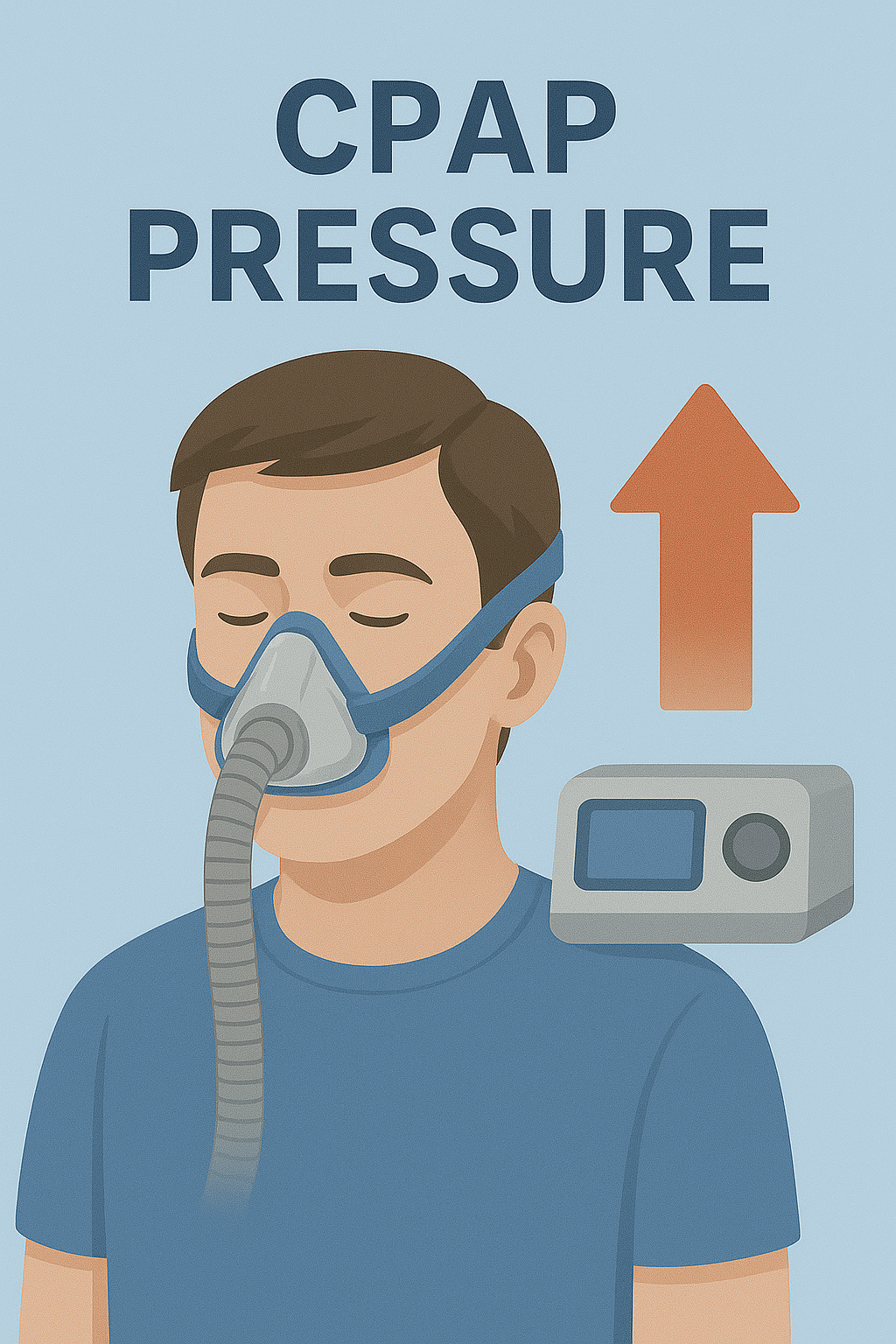
CPAP pressure that’s too high or too low can make therapy uncomfortable — and sometimes impossible. The good news? Most pressure-related problems have simple fixes. This guide explains how to tell if your pressure is incorrect and what you can do to improve comfort and effectiveness.
Signs Your CPAP Pressure Is Too High
Related CPAP Guides:
If your pressure is higher than you need, you may experience:
- Difficulty exhaling against the airflow
- Dry mouth, even with a humidifier
- Mask leaks caused by strong airflow
- Bloating or “air swallowing” (aerophagia)
- Nasal dryness or burning
- Waking up feeling “air blasted”
How to Fix Pressure That’s Too High
1. Enable EPR (Expiratory Pressure Relief)
This reduces pressure automatically when you exhale, making breathing easier.
2. Check for mask leaks
High pressure exaggerates leaks. Fixing leaks makes the pressure feel lower.
Related: How to Stop CPAP Mask Leaks
3. Use a CPAP pillow
These reduce mask shifting and help seal at higher pressures.
4. Talk to your provider
If symptoms persist, your prescribed pressure may need adjusting.
Signs Your CPAP Pressure Is Too Low
Pressure that’s too low won’t keep your airway open properly. You may notice:
- Morning headaches
- Snoring while on CPAP
- Feeling short of breath
- Waking up gasping or choking
- Persistent daytime sleepiness
- Dry mouth from mouth breathing
How to Fix Pressure That’s Too Low
1. Reduce mouth breathing
If air escapes through your mouth, CPAP feels underpowered. A chin strap helps keep the mouth closed.
2. Fix mask leaks
Just like high pressure, leaks can make air “feel weak” even when your pressure is correct.
Related: How to Stop CPAP Mask Leaks
3. Use ramp mode correctly
If the pressure feels too low only at the beginning of the night, your ramp may be set too slow or too low.
4. Consult your provider
If symptoms persist, you may need a higher pressure setting.
Aerophagia (Air Swallowing) From Improper Pressure
Air swallowing can happen if your pressure is too high — or if you mouth-breathe while using CPAP.
Common symptoms include:
- Bloating
- Burping
- Belly pressure or discomfort
Fix: Lower pressure slightly (under guidance), use EPR, and prevent mouth leaks.
Related: Fixing CPAP Dry Mouth
How to Know If Your CPAP Pressure Is Correct
A well-adjusted CPAP pressure should:
- Stop snoring
- Prevent choking episodes
- Feel easy to breathe against
- Cause minimal leaks
- Let you wake up refreshed
If any of these are missing, your pressure may need adjustment.
Quick Summary
Pressure too high:
- Hard to exhale
- Mask leaks
- Dry mouth / nasal irritation
- Bloating
Pressure too low:
- Snoring
- Choking or gasping
- Weak airflow feeling
- Mouth breathing
Final Thoughts
CPAP pressure problems are extremely common — especially for beginners. With a few quick adjustments and the right accessories, you can eliminate discomfort and get consistent, effective therapy.
Explore more CPAP beginner guides: