 https://nightlycalm.com/wp-content/uploads/2025/12/ChatGPT-Image-Dec-7-2025-09_52_14-AM.png
NightlyCalm.com is a participant in the Amazon Services LLC Associates Program, an affiliate advertising program designed to provide a means for sites to earn fees by linking to Amazon.com. As an Amazon Associate, I earn from qualifying purchases.
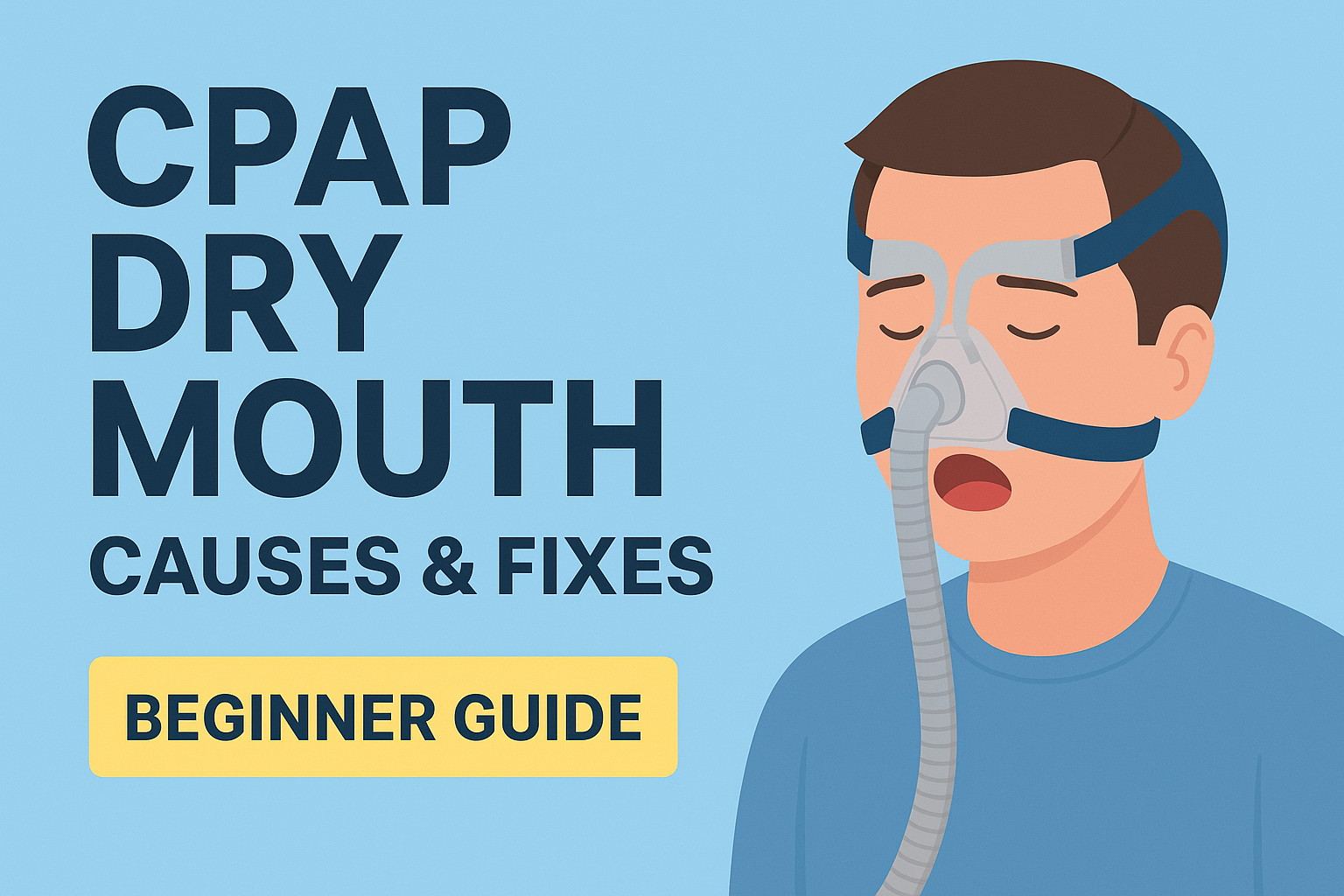
Waking up with dry mouth is one of the most common CPAP complaints, especially for beginners. The good news? It’s almost always fixable with a few simple adjustments.
In this guide, you’ll learn the top causes of CPAP dry mouth — and the easiest solutions to help you sleep comfortably through the night.
What Causes Dry Mouth With CPAP?
Related CPAP Guides:
Dry mouth usually comes from o
ne of three things:
- Your mouth opens during sleep (most common)
- Low humidity from the CPAP machine
- Mask leaks around the cushion
Let’s go through each cause and how to fix it.
1. Mouth Opening During Sleep
If you use a nasal pillow or nasal mask, air can escape through your mouth. This dries out your throat and reduces CPAP effectiveness.
Fix: Use a gentle CPAP chin strap to keep your jaw supported.
If dry mouth continues even with a chin strap, you may need a full face mask.
2. Low CPAP Humidity Settings
CPAP machines add moisture to the air to prevent dryness. If humidity is too low, you may wake up with a dry mouth, throat, or nose.
Fix: Increase humidity 1–2 levels at a time until dryness improves.
You can also use humidifier cleaning tablets to keep your chamber fresh.
3. Mask Leaks
If your mask leaks, air may escape and cause dryness — especially if the cushion is worn, dirty, or not sealing well.
Fix: Clean the mask cushion daily and ensure straps are not overtightened.
See: How to Stop CPAP Mask Leaks at Night
4. Mouth Breathing Even With a Chin Strap
Some users still breathe through their mouth even when using a chin strap. In this case, switching to a full face mask is often the best solution.
5. Try a Moisturizing CPAP-Safe Mouth Spray
Some CPAP users find relief using a moisturizing spray before bed. These sprays coat your mouth and throat to reduce dryness.
6. Use Heated Tubing for Extra Moisture
Heated CPAP tubing keeps air warm and humid all the way to your mask. This prevents condensation (“rainout”) and dryness.
7. Stay Hydrated Before Bed
Dehydration increases dry mouth symptoms. A small glass of water before bedtime can help — as long as you avoid big drinks that lead to nighttime bathroom trips.
Summary: Quick Fixes for CPAP Dry Mouth
- Use a chin strap to keep your mouth closed
- Increase CPAP humidity settings
- Try a CPAP pillow to reduce mask shifting
- Switch to a full face mask if needed
- Use heated tubing for more moisture
- Clean your mask cushion daily
Final Thoughts
Dry mouth is frustrating, but with a few adjustments, most CPAP beginners solve it quickly. Start with humidity, mask fit, and mouth support, and you’ll see a big improvement in comfort and sleep quality.
For more beginner-friendly CPAP guides, explore:
- How to Stop CPAP Mask Leaks at Night
- Best CPAP Pillows for Side Sleepers
- CPAP Essentials for Beginners
Frequently Asked Questions
Why do I get dry mouth even when using CPAP?
Dry mouth usually happens because your mouth opens during sleep, humidity is too low, or your mask leaks. These issues reduce moisture and cause air to escape through your mouth.
How do I stop mouth breathing with CPAP?
A gentle chin strap helps keep the jaw closed. If mouth breathing continues, a full face mask may be necessary for complete coverage.
Should I increase humidity to fix CPAP dry mouth?
Yes. Raising humidity 1–2 levels often helps. Just increase slowly until dryness improves without causing rainout.
Can mask leaks cause dry mouth?
Absolutely. When the mask leaks, air pressure drops, leading to dryness and reduced therapy effectiveness. Cleaning or replacing the cushion usually fixes this.
Does heated tubing help with dry mouth?
Heated tubing delivers warm, moist air all the way to the mask, improving comfort and reducing dryness caused by cool airflow.
Is a full face mask better for dry mouth?
Yes, if you consistently breathe through your mouth. A full face mask keeps therapy pressure stable even when your mouth opens.