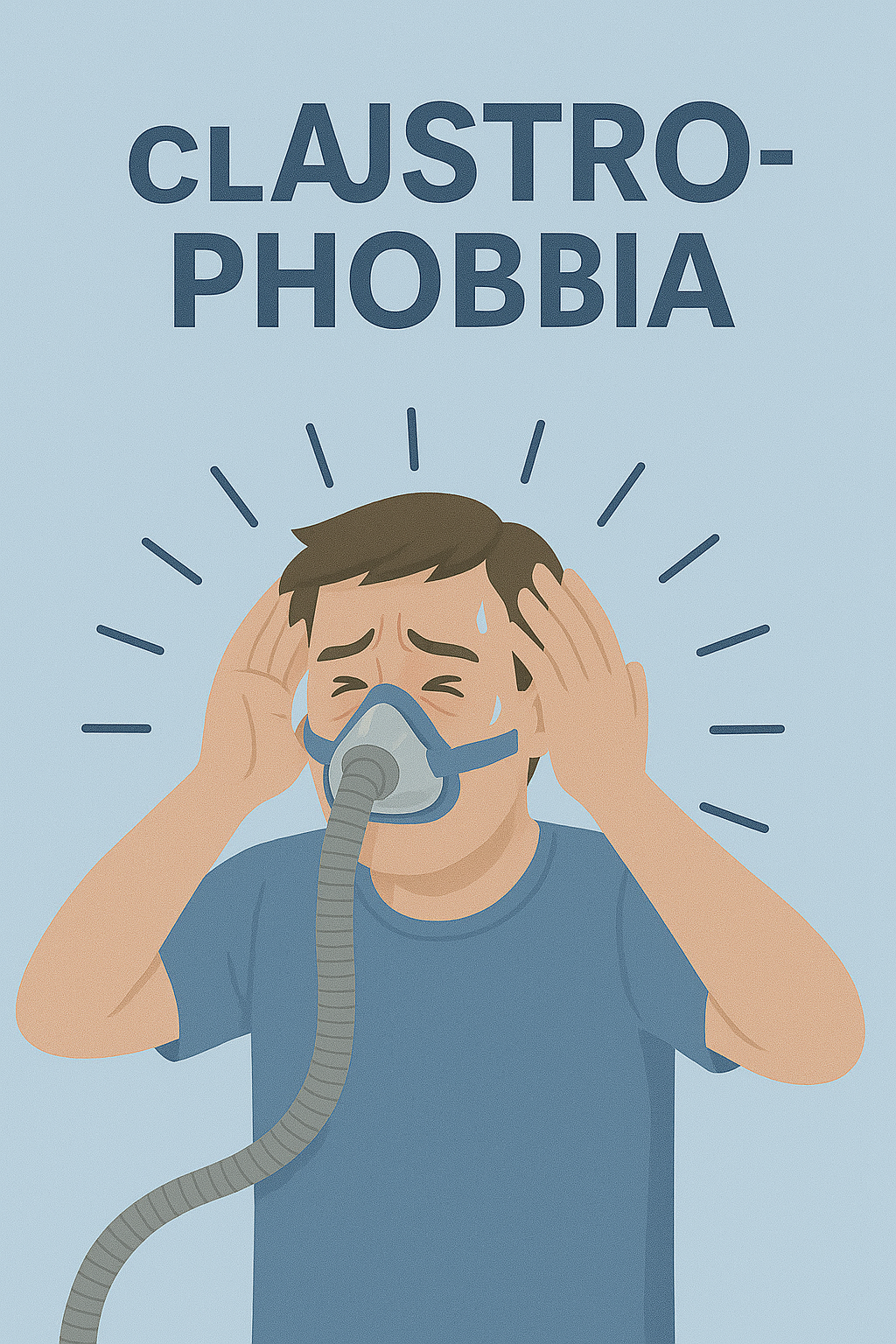
CPAP Claustrophobia: Causes, Relief Tips & How to Get Comfortable
Everything is cleaned up, tightened, improved for readability, and structured so Google and readers both love it — while keeping all affiliate links, buttons, and formatting.
⭐ CPAP Claustrophobia: Causes & Easy Ways to Feel Comfortable
NightlyCalm.com is a participant in the Amazon Services LLC Associates Program, an affiliate advertising program designed to provide a means for sites to earn fees by linking to Amazon.com. As an Amazon Associate, I earn from qualifying purchases.
Feeling claustrophobic when wearing a CPAP mask is extremely common — especially for beginners. The sensation of airflow, the mask touching your face, and pressure changes can make some users feel trapped or anxious.
The good news: CPAP claustrophobia is highly manageable with gentle, step-by-step techniques.
This guide explains why claustrophobia happens and how to relax, adapt, and breathe more comfortably with CPAP.
Related CPAP Guides:
⭐ Why CPAP Claustrophobia Happens
Most CPAP-related claustrophobia comes from:
- The mask covering your nose or mouth
- The sensation of pressure when inhaling/exhaling
- Fear of not getting enough air
- Feeling “closed in” when lying in bed
- A history of anxiety or panic sensations
These reactions are normal — and they improve significantly as your brain adapts to therapy.
⭐ 1. Start Wearing the Mask During the Day
Exposure in small, low-stress sessions retrains your brain that the mask is safe.
How to start:
Wear the mask while watching TV or reading
No need to turn the machine on at first
Keep sessions short: 10–15 minutes
Goal:
Get used to having the mask on without bedtime pressure or expectations.
⭐ 2. Use Ramp Mode to Start With Lower Pressure
If full pressure feels overwhelming, ramp mode begins therapy at a lower setting and increases it gradually once you’re asleep.
Related: CPAP Pressure Too High or Too Low
⭐ 3. Choose a Minimal-Contact Mask
Full-face masks can feel enclosed or heavy. Many claustrophobic users find immediate relief with nasal pillow masks, which barely touch the face.
⭐ 4. Practice Slow, Calm Breathing
Anxiety triggers rapid, shallow breaths — which make CPAP feel more intense.
Slow breathing resets your nervous system.
Try this pattern:
Inhale 4 seconds → Exhale 6 seconds
Repeat for 1–2 minutes.
⭐ 5. Make Sure Your Mask Isn’t Too Tight
Over-tightened straps increase the sense of pressure and confinement, making claustrophobia worse.
Related: Fixing CPAP Strap Problems
⭐ 6. Use a CPAP Pillow for More Freedom of Movement
Regular pillows can push the mask around, increase pressure on your face, or make you feel restricted.
CPAP pillows have side cutouts that allow the mask to sit freely.
⭐ 7. Keep the Hose Positioned Above You
If the hose pulls downward or tugs on your mask, it can create a restrictive, “held down” feeling.
Fix:
Use a hose lift or an overhead hose holder so the hose moves freely above you.
Related: CPAP Hose Management Tools
⭐ 8. Try “Mask On, Machine Off” Desensitization
This simple therapy technique is extremely effective for CPAP anxiety:
- Put on the mask with no pressure
- Breathe naturally for 1–2 minutes
- Turn CPAP on at low pressure
- If anxiety rises, turn it off and repeat
Your brain gradually associates the mask and airflow with safety instead of fear.
⭐ 9. Adjust Humidity and Temperature Settings
Air that feels dry or cold can worsen discomfort.
Increasing humidity or warming the hose often feels more natural and less “medical.”
⭐ 10. Be Patient With Yourself
Most users adapt to CPAP within 2–4 weeks.
Claustrophobia decreases dramatically as your mind builds new patterns of comfort and familiarity.
⭐ Quick Summary: How to Reduce CPAP Claustrophobia
- Practice wearing the mask during the day
- Use ramp mode to ease into pressure
- Switch to a minimal-contact mask if needed
- Loosen straps to reduce closed-in feeling
- Use a CPAP pillow for more movement freedom
- Position the hose overhead
- Practice slow, calming breaths
⭐ Final Thoughts
Claustrophobia is one of the most common barriers to CPAP success — but also one of the most solvable. With gradual exposure, gentle breathing techniques, the right equipment, and small comfort upgrades, most users overcome the anxious sensations and sleep comfortably with CPAP.
⭐ Explore More CPAP Beginner Guides
Frequently Asked Questions
Why do I feel claustrophobic when wearing a CPAP mask?
Claustrophobia usually happens because the mask feels restrictive, the airflow feels strong, or you’re not yet used to having something on your face at night.
Does CPAP claustrophobia go away with time?
Yes. Most beginners adapt within 2–4 weeks using gradual exposure, ramp mode, and breathing exercises.
Which CPAP mask is best for claustrophobia?
Nasal pillow masks are the least confining and are often preferred by people who feel trapped in full-face masks.
How can I practice getting comfortable with my CPAP mask?
Wear the mask during the day while awake for 10–15 minutes. Start without turning the machine on, then slowly introduce airflow.
Can tightening the straps make claustrophobia worse?
Yes. Over-tightened straps increase the sense of being restricted. Loosening them slightly helps reduce anxiety.
Does CPAP ramp mode help with claustrophobia?
Ramp mode starts with lower pressure, making it easier to relax and fall asleep without feeling overwhelmed.
What should I do if I panic while using CPAP?
Turn the machine off, breathe slowly, and try again once calm. Gradual desensitization usually eliminates panic episodes.