CPAP Air Leaking Into Eyes: Causes & Easy Fixes
Everything is cleaned, structured, and optimized while keeping all your Amazon links, buttons, and WordPress-friendly HTML intact.
Paste this directly into WordPress.
⭐ CPAP Air Leaking Into Eyes: Causes & Fixes
NightlyCalm.com is a participant in the Amazon Services LLC Associates Program, an affiliate advertising program designed to provide a means for sites to earn fees by linking to Amazon.com. As an Amazon Associate, I earn from qualifying purchases.
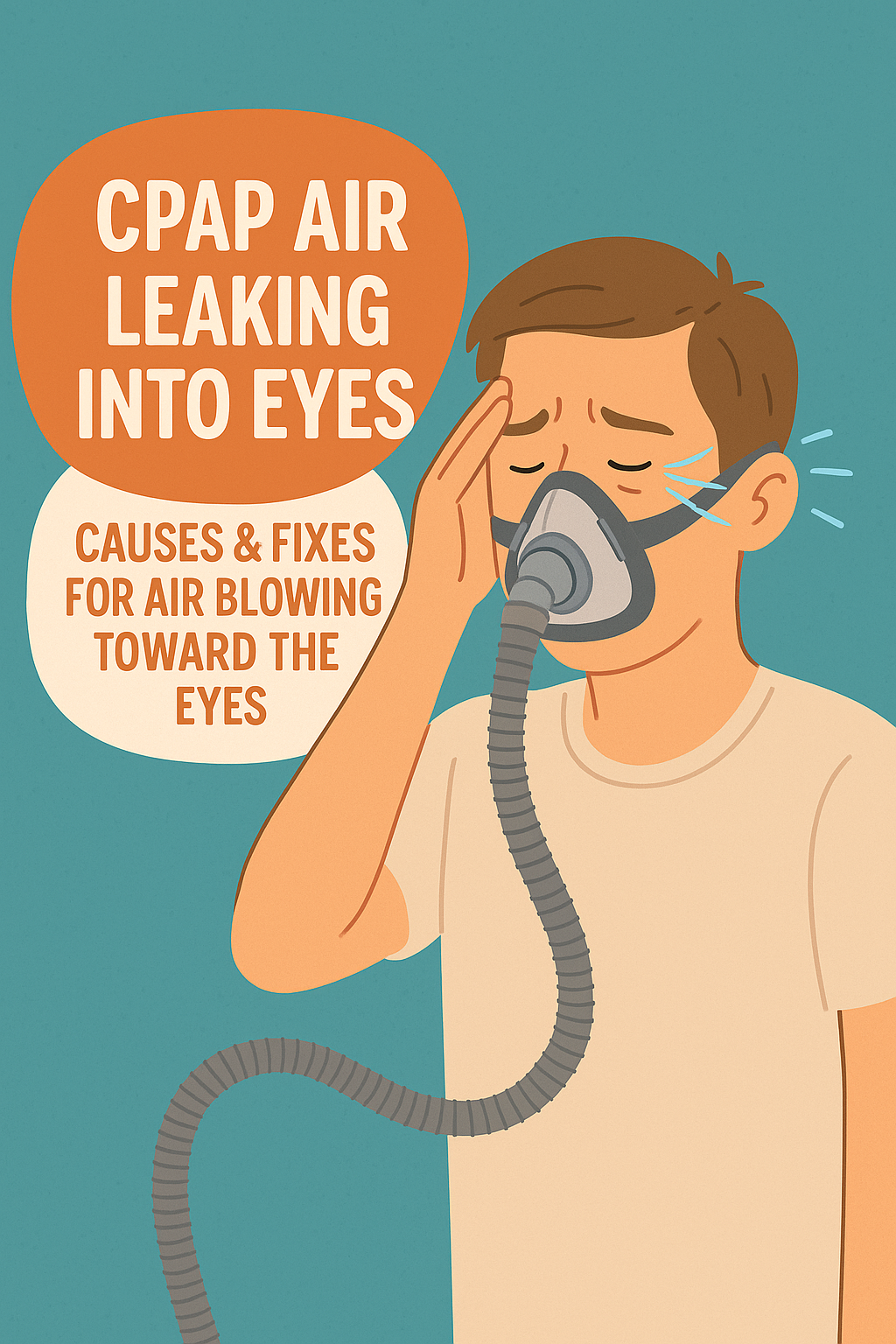
Air leaking into your eyes during CPAP therapy is one of the most irritating problems for beginners. These upward leaks usually come from the nose bridge area and can lead to dry eyes, tearing, redness, morning irritation, or a gritty feeling.
The good news: eye leaks are almost always caused by mask fit issues — and the fixes are simple.
This guide explains why CPAP leaks blow into your eyes and how to stop them completely.
Related CPAP Guides:
⭐ Why CPAP Air Leaks Into the Eyes
Upward airflow typically happens when:
- Your mask is too loose on the nose bridge
- Your mask is too tight and collapses the cushion
- The cushion is old and losing grip
- Your mask size is incorrect
- Your facial structure isn’t compatible with the mask style
Even a tiny gap can send a stream of air upward.
⭐ 1. Adjust the Nose Bridge Fit
This is the most common fix.
If the upper straps are too loose → air escapes upward.
If they’re too tight → the cushion collapses and directs air toward your eyes.
Fix: Adjust the upper straps in 1–2 mm increments until the leak stops.
Related: Fixing CPAP Strap Problems
⭐ 2. Reseat the Cushion While Lying Down
CPAP masks seal differently when lying down than sitting upright. If you fit the mask while upright, the seal often breaks once you’re in bed.
Fix:
Lie in your normal sleep position → turn the machine on → gently lift and release the cushion so it inflates naturally.
⭐ 3. Replace a Worn-Out Cushion
Old silicone becomes stiff, warped, or oily — all of which cause leaks near the nose bridge.
Fix: Replace the cushion every 1–3 months.
⭐ 4. Use Mask Liners to Improve the Seal
Mask liners add a soft fabric barrier that increases grip and prevents air from sneaking upward.
⭐ 5. Try a Different Mask Size
If the bridge of your nose is naturally narrow or wide, a standard cushion may never seal properly.
Fix: Use your mask brand’s sizing guide to verify you have the correct size.
⭐ 6. Consider Switching Mask Styles
Certain face shapes simply don’t fit certain mask designs. If you always get upward leaks, switching styles often solves the problem instantly.
- Nasal pillow masks: Best for preventing upward leaks
- Nasal masks: Balanced fit and comfort
- Full-face masks: Effective, but prone to eye leaks if not fitted perfectly
⭐ 7. Reduce Humidity if Condensation Lifts the Cushion
Too much humidity → moisture builds inside the cushion → grip decreases → tiny gaps form near the nose bridge.
Fix: Reduce humidity by 1–2 levels or use a heated hose.
Related: What Causes CPAP Rainout
⭐ 8. Check Hose Positioning
If the hose tugs downward on the mask, the top edge can lift slightly — creating eye leaks.
Fix: Suspend the hose overhead or use a hose lift.
⭐ Quick Summary: How to Stop CPAP Air Leaks Into Eyes
- Adjust top straps carefully
- Reseat the cushion while lying down
- Replace worn-out cushions
- Use mask liners for better sealing
- Verify mask size
- Switch to nasal pillows or different mask types if needed
- Lower humidity if condensation lifts the mask
- Use hose management to prevent downward tugging
⭐ Final Thoughts
Air blowing into your eyes is one of the most uncomfortable CPAP issues — but also one of the easiest to fix. With proper strap tension, good cushion inflation, clean materials, and stable hose positioning, most users eliminate eye leaks within one or two nights.
⭐ Explore More CPAP Comfort Guides