
Introduction
When people think of sleep apnea, they usually picture loud snoring or gasping for air during sleep. While those signs are common, they are far from the whole picture.
Thank you for reading this post, don't forget to subscribe!Many people with sleep apnea never suspect it because their symptoms don’t match what they expect. Instead of dramatic breathing pauses, they experience subtle, everyday problems that are easy to dismiss as stress, aging, poor sleep habits, or lifestyle issues.
Sleep apnea often hides behind symptoms that feel unrelated to breathing at night. Because these signs develop gradually, they can go unnoticed for years.
This guide explains the sleep apnea symptoms people most often miss, why they’re overlooked, and when they’re worth paying attention to.
Why Sleep Apnea Symptoms Are Easy to Miss
Sleep apnea does not always present the same way in every person. Symptoms vary depending on age, sleep position, overall health, and how long the condition has been present.
Many symptoms occur during the day rather than at night, making it difficult to connect them to sleep. Others feel so common that they’re accepted as “normal,” even when they’re not.
Because sleep apnea develops gradually, people often adapt to feeling tired or unwell without realizing something deeper is affecting their sleep quality.
Daytime Symptoms People Often Overlook
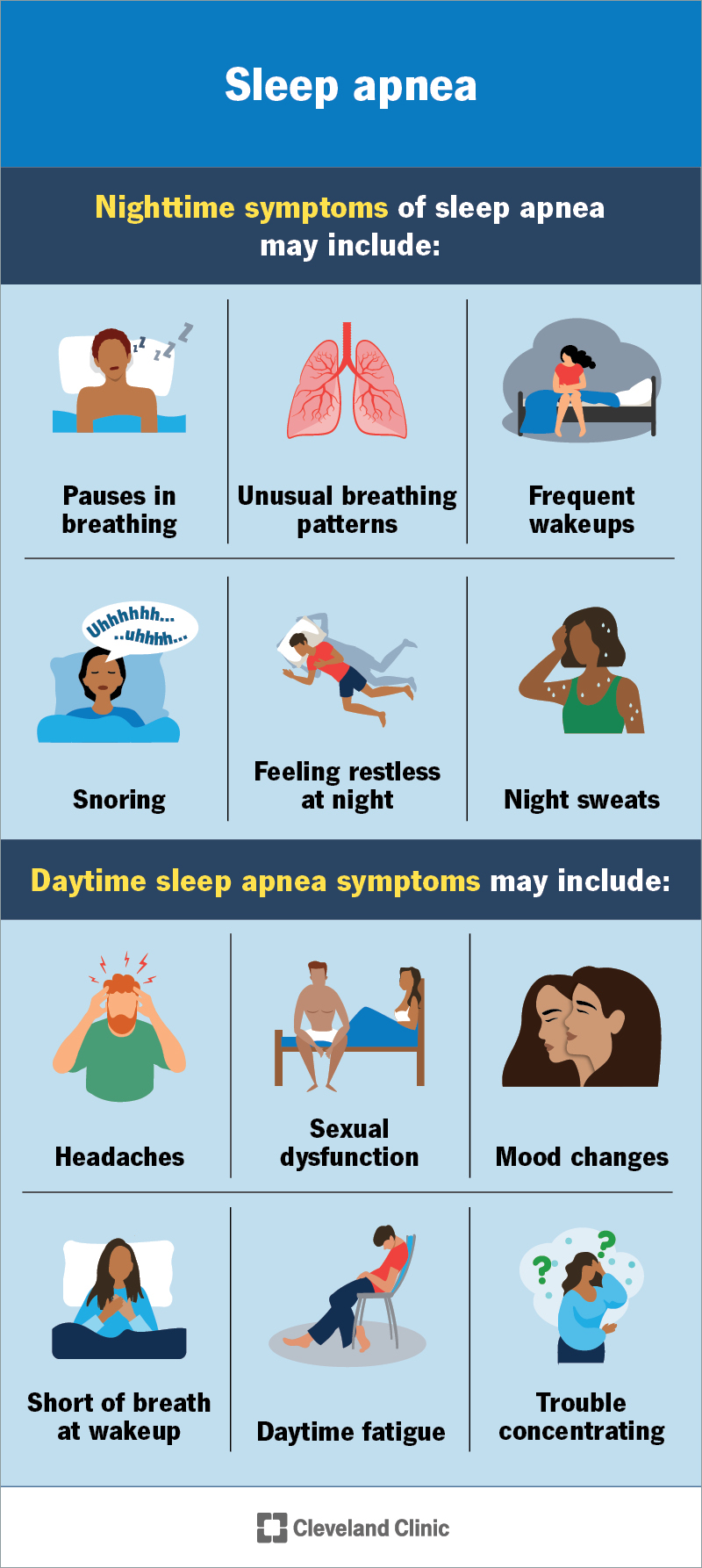
Persistent Fatigue (Even After a Full Night’s Sleep)
One of the most common missed symptoms is waking up tired despite spending enough time in bed. This fatigue often feels different from ordinary tiredness — it can feel heavy, constant, or difficult to shake.
Because people assume more sleep should fix the problem, they rarely suspect a sleep disorder.
Difficulty Concentrating or “Brain Fog”
Sleep apnea disrupts the brain’s ability to reach deep, restorative sleep. Over time, this can affect attention, memory, and mental clarity.
Many people describe feeling mentally slow, unfocused, or forgetful without realizing poor sleep quality may be the cause.
Morning Headaches
Headaches upon waking are another overlooked sign. They may be mild and fade quickly, which makes them easy to ignore.
These headaches are often related to changes in oxygen levels and sleep disruption during the night.
Mood Changes and Irritability
Chronic sleep disruption can affect emotional regulation. People with sleep apnea may feel more irritable, anxious, or emotionally flat.
Because mood changes are commonly attributed to stress or life circumstances, sleep is rarely considered as a contributing factor.
Nighttime Symptoms That Aren’t Always Obvious
Frequent Nighttime Awakenings
Waking up multiple times during the night — even briefly — can indicate disrupted breathing. These awakenings may be so short that they’re barely remembered.
People often assume they are simply light sleepers.
Restless or Unrefreshing Sleep
Some people move frequently during sleep or wake up feeling like they never reached deep rest. This restless quality is often blamed on insomnia or discomfort rather than breathing interruptions.
Dry Mouth or Sore Throat in the Morning
Waking up with a dry mouth or sore throat can be a sign of mouth breathing during sleep, which commonly occurs alongside sleep apnea.
These symptoms are frequently attributed to dehydration or room conditions instead.
Symptoms That Depend on Who You Are
Symptoms in People Who Don’t Snore Loudly
Not everyone with sleep apnea snores loudly. Some people experience airway collapse without significant noise, especially if they sleep alone and have no one to observe their sleep.
This makes apnea easier to miss.
Symptoms in Women
Women may experience sleep apnea differently than men. Instead of loud snoring, symptoms may include fatigue, insomnia, headaches, or mood changes.
Because these signs don’t match the stereotype of sleep apnea, diagnosis is often delayed.
Symptoms in Older Adults
In older adults, sleep apnea symptoms are sometimes mistaken for normal aging. Memory issues, daytime sleepiness, or balance problems may be incorrectly accepted as unavoidable.
Why These Symptoms Are Often Dismissed
Many sleep apnea symptoms overlap with everyday life challenges. Busy schedules, stress, caffeine use, and poor sleep habits can mask underlying sleep disorders.
People also tend to normalize how they feel over time. When symptoms develop slowly, it becomes harder to recognize that something has changed.
When Missed Symptoms Are Worth Investigating
Occasional tiredness is normal. However, ongoing symptoms that persist despite adequate sleep deserve attention.
If multiple symptoms appear together — such as fatigue, brain fog, morning headaches, or unrefreshing sleep — it may be worth exploring sleep quality more closely.
Seeking evaluation does not mean something is “wrong.” It simply helps rule out sleep-related causes.
How These Symptoms Connect to CPAP and Treatment
For people diagnosed with sleep apnea, many of these overlooked symptoms improve once sleep quality stabilizes.
Issues such as mask discomfort, pressure problems, dry mouth, or leaks can interfere with treatment effectiveness, which is why addressing CPAP comfort is important.
👉 The Sleep Apnea Resource Hub and CPAP Resource Hub explain how symptoms, diagnosis, and treatment challenges connect.
Quick Summary
Sleep apnea doesn’t always look the way people expect. Many of the most common symptoms — fatigue, brain fog, mood changes, or unrefreshing sleep — are easy to overlook or dismiss.
Because these symptoms develop gradually, people often adapt to them without realizing sleep quality is being affected. Recognizing these signs can be the first step toward understanding what’s really happening during sleep.