Thank you for reading this post, don't forget to subscribe!
Sleep Apnea Basics
-
Do You Have Sleep Apnea? (symptoms explainer)
CPAP Therapy–Related
-
CPAP Mask Leaks
When CPAP Doesn’t Work
Alternative treatments (contextual links)
⭐ Treatment for Snoring (Non-Apnea)
Snoring alone is usually harmless, and many people improve with simple lifestyle or environmental changes.
1. Side Sleeping
Sleeping on your back causes the tongue and soft tissues to fall backward, narrowing the airway.
Side sleeping opens the airway and often reduces snoring immediately.
2. Weight Management
Extra tissue around the neck can increase airway vibration. Even small weight changes may reduce snoring volume.
3. Nasal Strips or Nasal Dilators
These widen the nasal passages, improving airflow. They’re useful for:
Mild congestion
Narrow nasal passages
Snoring that worsens during colds or allergy seasons
4. Humidifiers
Dry air irritates the airway and nasal passages, increasing snoring. Adding moisture can reduce vibration.
5. Avoiding Alcohol Before Bed
Alcohol relaxes throat muscles, making snoring more likely. Avoiding it 2–3 hours before sleep can help.
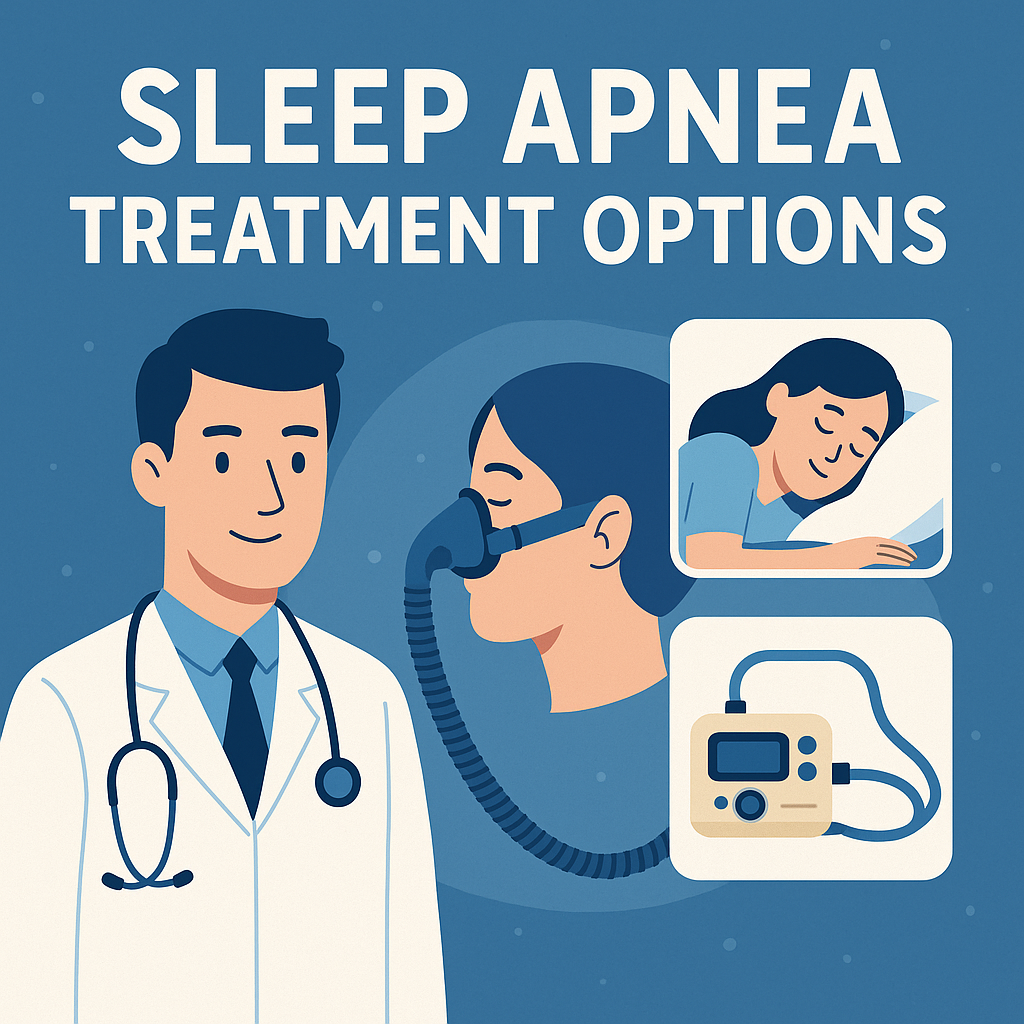
Sleep apnea requires more structured treatment because it involves repeated breathing interruptions. Here are the primary options, explained clearly:
1. CPAP Therapy (Most Effective)
CPAP (Continuous Positive Airway Pressure) keeps the airway open using gentle air pressure.
It’s the gold standard for treating obstructive sleep apnea (OSA).
Benefits include:
Eliminates breathing pauses
Improves oxygen levels
Reduces snoring
Increases energy and focus
Lowers long-term health risks
2. APAP (Auto-Adjusting CPAP)
APAP machines automatically change pressure throughout the night based on your needs.
Great for people who need varying pressures or have changing sleep positions.
3. Oral Appliance Therapy
A dentist-made mouthpiece that moves the jaw forward to keep the airway open.
Best for:
Mild to moderate sleep apnea
People who can’t tolerate CPAP
4. Positional Therapy
Some people experience apnea mainly when sleeping on their back.
Tools include:
Positional belts
Back-sleeping alarms
Specialized pillows
5. Weight Loss (When Applicable)
Losing weight can reduce airway collapse in people with OSA—especially central neck fat.
Often combined with CPAP for best results.
6. Treating Nasal Obstruction
Helps air move more easily through the nose. Options include:
Allergy treatment
Nasal sprays (prescription or OTC)
Addressing structural issues like a deviated septum
7. Surgery (Rare; Last Resort)
Procedures may include:
UPPP (removing excess throat tissue)
Nasal surgery
Jaw advancement
Inspire implant (for certain candidates)
Surgery is reserved for people who cannot use CPAP or oral appliances.
👍 Let me know if you want…
A shorter version
A more medical/professional tone
A simplified “patient-friendly” version
A bullet-only scannable format
A comparison chart for snoring vs apnea treatments
Just tell me the style you want, and I’ll tailor it.