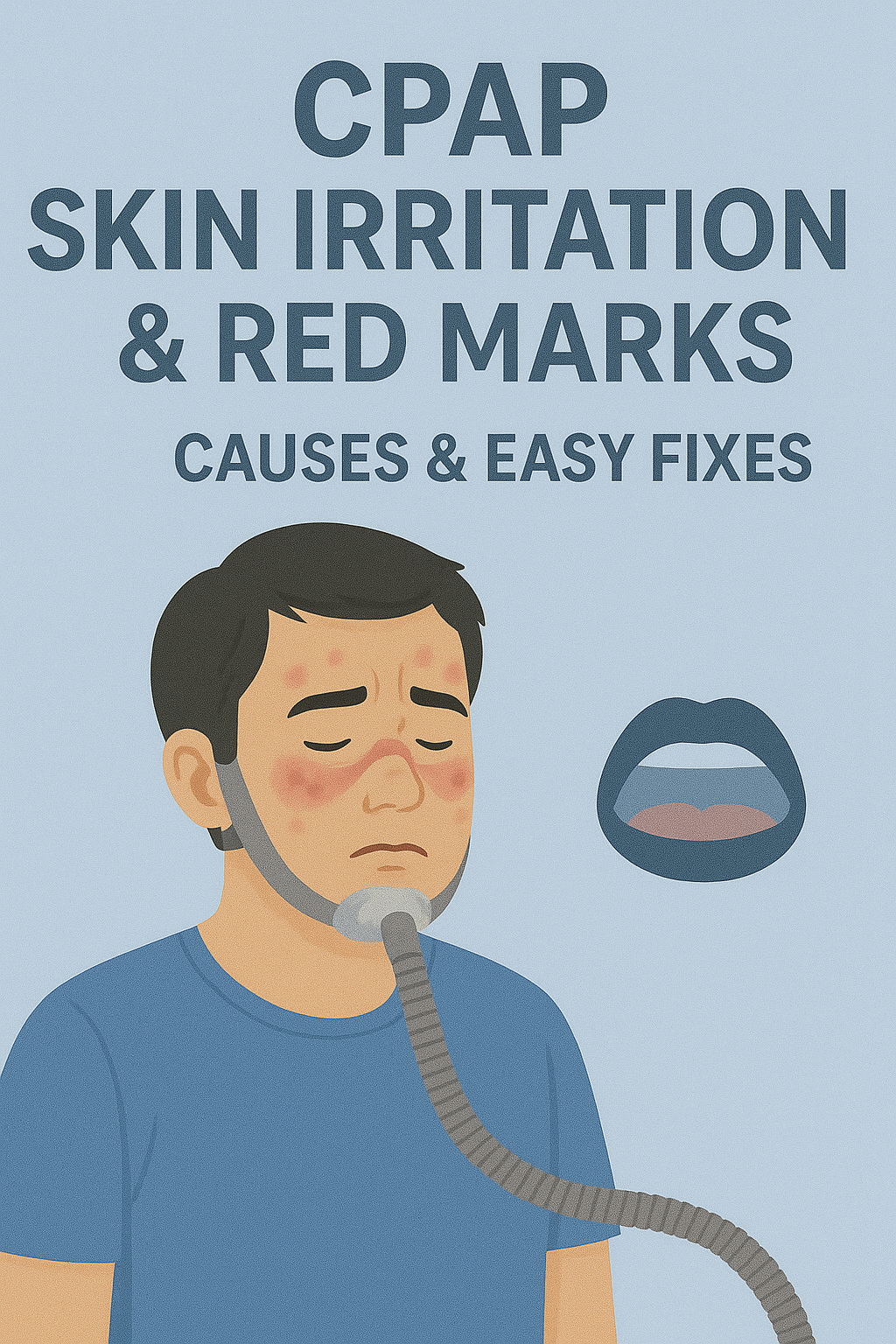
CPAP Pressure Marks, Red Marks & Skin Indentations: Causes & Easy Fixes
NightlyCalm.com is a participant in the Amazon Services LLC Associates Program, an affiliate advertising program designed to provide a means for sites to earn fees by linking to Amazon.com. As an Amazon Associate, I earn from qualifying purchases.
Waking up with red marks, deep indentations, or pressure lines across the cheeks or nose is extremely common for CPAP beginners. These marks look alarming — but they’re almost always caused by a few simple issues with mask fit, skin friction, or worn-out cushions.
Related CPAP Guides:
The good news? Pressure marks are 100% fixable once you understand the cause.
This guide explains why CPAP masks leave red marks and the easiest ways to eliminate them overnight.
Why CPAP Masks Cause Red Marks & Indentations
Most pressure marks come from:
Straps pulled too tight
A cushion that’s old or stiff
High friction between skin & silicone
Wrong mask size
Sleeping on your side without proper pillow support
Uneven strap tension
Let’s fix each one.
1. Your Mask Straps Are Too Tight
Over-tightening is the #1 cause of pressure marks and indentations.
When the mask is too tight:
The cushion collapses
Silicone digs into your skin
Redness appears across the cheeks or nose bridge
Fix:
Loosen straps 1–2 mm at a time. Let the cushion inflate naturally and create the seal.
Related:
Fixing CPAP Strap Problems
2. Use Mask Liners to Reduce Skin Pressure
Mask liners create a soft fabric barrier between your skin and the silicone cushion.
They help by:
Reducing pressure dents
Preventing cheek irritation
Improving mask sealing
Eliminating morning skin lines
3. Replace Worn-Out Cushions
Old CPAP cushions stiffen over time. A stiff cushion digs into the skin and creates deeper indentations.
Fix:
Replace your cushion every 1–3 months for best comfort.
4. Use Strap Covers to Prevent Cheek Indentations
Strap covers add padding to the headgear and prevent:
Deep strap marks
Red lines along the cheek
Indents that take hours to fade
5. Apply Moisturizing Gel (But Not Right Before Bed)
Moisturizing helps reduce friction, but applying lotion right before bedtime may break the mask seal.
Fix:
Apply moisturizer 1 hour before bed, allowing full absorption.
You can also use a CPAP-safe barrier gel.
6. Switch to a CPAP Pillow for Side Sleeping
Standard pillows push the mask sideways, increasing cheek pressure and causing marks.
A CPAP pillow:
Prevents mask shifting
Reduces pressure on the cheeks
Stops white pillow lines
Helps maintain an even seal
7. Check Your Mask Size
Incorrect sizing causes uneven pressure:
Too small → digs into skin
Too large → slides and presses awkwardly
Fix:
Use the manufacturer’s printable sizing guide and verify fit.
8. Ensure Even Strap Tension
Uneven straps cause one side to pull harder, creating asymmetrical marks.
Fix:
Adjust both sides evenly — tiny adjustments make a big difference.
Quick Summary: How to Stop CPAP Pressure Marks
Loosen overly tight straps
Use mask liners to reduce friction
Replace cushion every 1–3 months
Add strap covers for comfort
Use a CPAP pillow for side sleeping
Apply moisturizer earlier in the evening
Ensure proper mask sizing
Adjust straps evenly
Final Thoughts
Pressure marks and red lines are annoying — but very easy to fix. With better mask fit, fresher cushions, and soft accessories like liners or strap covers, most users eliminate marks within just a few nights.
Want more CPAP comfort guides?
Fixing Dry Mouth
Understanding Pressure Settings