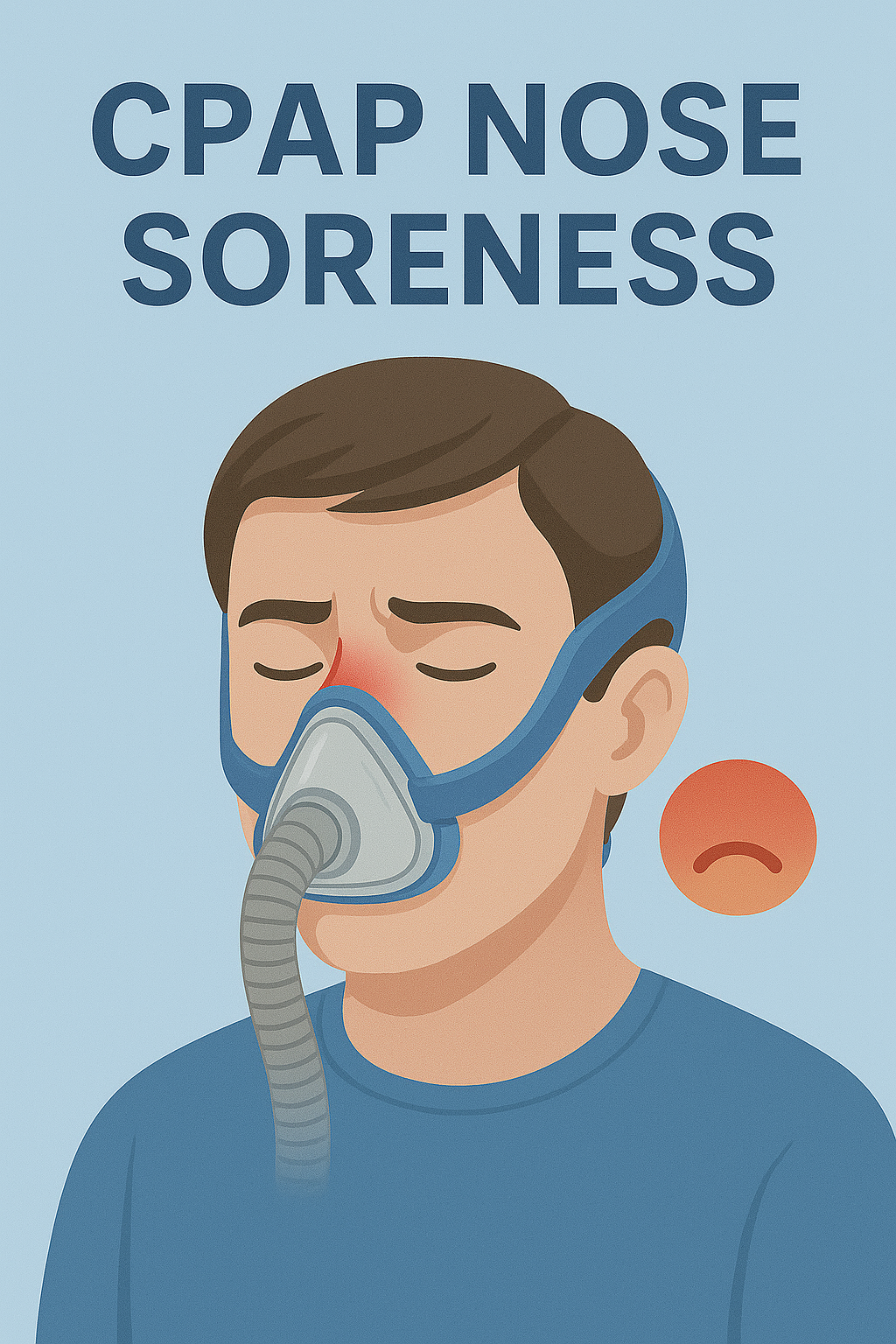
CPAP Nose Soreness: Causes & Easy Fixes for Nasal Pain from CPAP Therapy
NightlyCalm.com is a participant in the Amazon Services LLC Associates Program, an affiliate advertising program designed to provide a means for sites to earn fees by linking to Amazon.com. As an Amazon Associate, I earn from qualifying purchases.
Nose soreness is one of the most common comfort issues new CPAP users experience. Whether it’s redness on the bridge of the nose, irritation inside the nostrils, or pressure marks that linger into the day, CPAP nose pain is almost always fixable with a few simple adjustments.
This guide explains why CPAP causes nose soreness — and the best ways to stop it quickly.
Related CPAP Guides:
⭐ 1. Your Mask Is Too Tight
Over-tightening is the #1 cause of nose bridge soreness. Many users believe tighter straps reduce leaks — but the opposite is true. Over-tightening collapses the cushion, making leaks worse and increasing pressure on the nose.
Fix:
Loosen all straps slightly and allow the cushion to inflate naturally against your skin.
Related: Fixing CPAP Headgear Too Tight or Too Loose
⭐ 2. Your Mask Cushion Is the Wrong Size
If your cushion is too small or too large, it creates uneven pressure and causes nose discomfort.
Fix:
Use the manufacturer’s sizing guide to choose the correct size. A simple size change often solves the problem.
⭐ 3. The Mask Style Doesn’t Match Your Face Shape
Different mask styles distribute pressure differently. Some face shapes feel more nose pressure with nasal masks or full-face masks.
Nasal pillow masks often reduce nose bridge discomfort because they seal at the nostrils instead of across the nose.
Fix:
Try a different mask style if your current one always causes discomfort.
Nasal pillow masks (gentlest option)
Full face masks (great for mouth breathers)
⭐ 4. Irritation from Nasal Pillows
Nasal pillows can irritate the nostrils if:
The pillow size is too large
Humidity is too low
Airflow feels cold or dry
Fixes:
Switch to a smaller pillow size
Increase humidity by 1–2 levels
Apply a moisturizing, CPAP-safe nasal gel
⭐ 5. Friction from the Mask Cushion
Dry skin plus silicone cushion = friction.
Friction leads to redness, irritation, and sore spots around the nose.
Fix:
Apply a small amount of CPAP-safe moisturizer before bed.
Mask liners also help reduce friction by creating a soft barrier.
⭐ 6. Pressure on the Nose Bridge
Full-face masks and some nasal masks apply more pressure on the bridge of the nose — especially if the top straps are too tight.
Fix:
Loosen the top straps slightly
Increase humidity to reduce dryness-related soreness
Add strap covers to cushion the pressure
⭐ 7. Dirty or Worn-Out Cushions
A dirty cushion slides, loses grip, and irritates the skin.
A worn cushion stiffens, digs in, and causes pain.
Fix:
Clean your cushion daily
Replace it every 1–3 months for comfort and reduced irritation
⭐ 8. Allergic Reactions to Silicone (Rare)
Some users experience redness, rashes, or sensitivity to silicone materials.
Fix:
Use hypoallergenic mask liners to create a protective layer between your skin and the cushion.
⭐ Quick Summary: How to Fix CPAP Nose Soreness
Loosen tight straps (don’t overtighten)
Replace worn cushions
Switch mask size or style if needed
Increase humidity to reduce dryness
Use nasal gel for nostril irritation
Add mask liners for friction protection
⭐ Final Thoughts
CPAP nose soreness is extremely common in the beginning — but it’s also one of the easiest issues to solve.
With the right mask fit, proper cushion size, and a few comfort accessories, you can eliminate pain and protect your skin while still getting the full benefits of therapy.
Explore more CPAP comfort guides: