CPAP Nasal Congestion: Causes, Fixes & Easy Comfort Tips
NightlyCalm.com is a participant in the Amazon Services LLC Associates Program, an affiliate advertising program designed to provide a means for sites to earn fees by linking to Amazon.com. As an Amazon Associate, I earn from qualifying purchases.
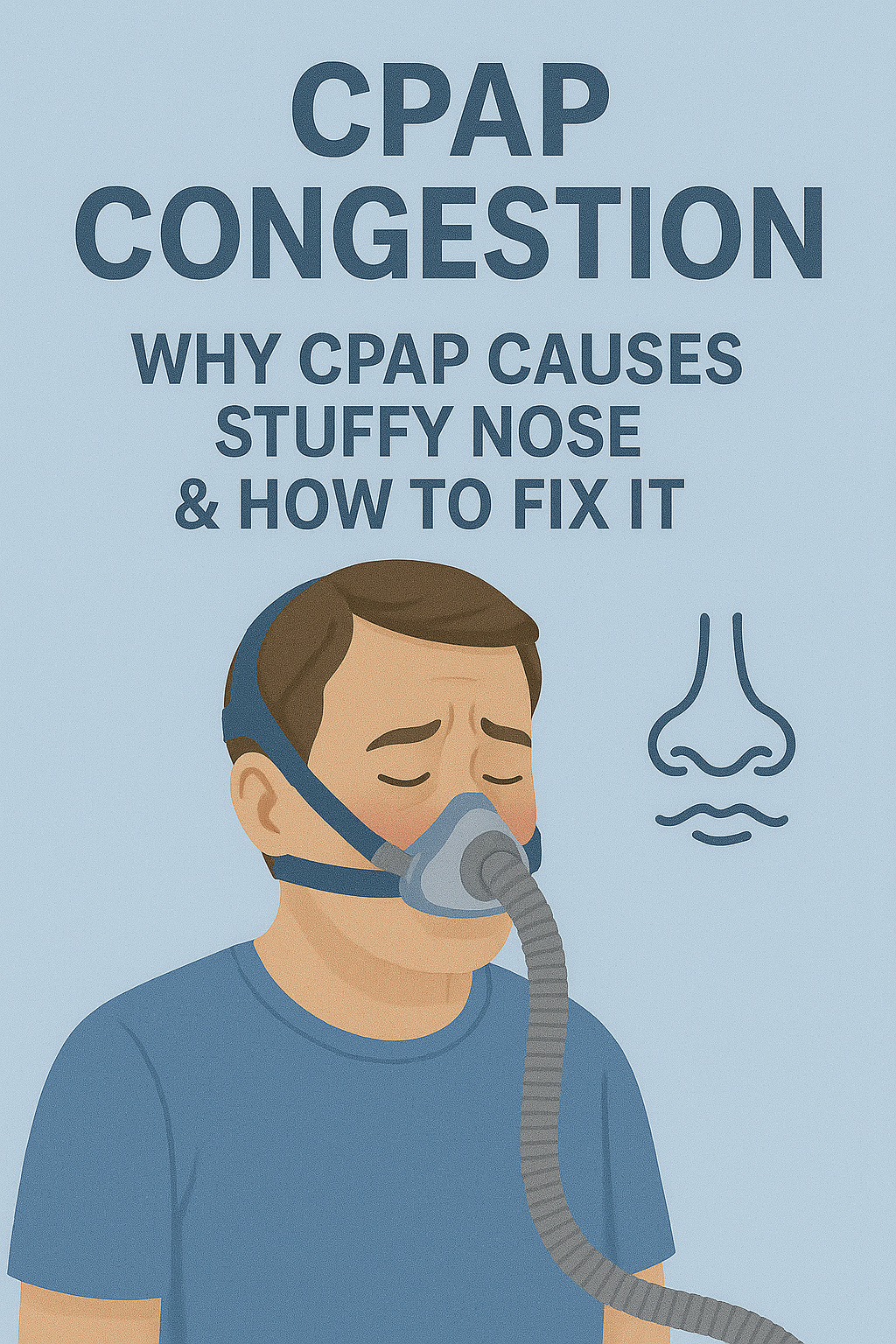
Waking up with a stuffy or blocked nose is one of the most common CPAP problems — especially for beginners. Dry air, pressure settings, mask leaks, and nasal irritation can all trigger congestion.
The good news? It’s almost always fixable.
This guide explains exactly why CPAP causes nasal congestion and the simple steps that make breathing easier.
Related CPAP Guides:
Symptoms of CPAP-Related Congestion
Stuffy or blocked nose
Difficulty breathing through the nose during therapy
Sinus pressure or fullness
Runny nose or increased mucus
Mouth breathing due to blocked nasal passages
1. Increase Humidity to Reduce Dryness
https://nightlycalm.com/cpap-dry-mouth-post/
Low humidity is the #1 cause of CPAP-induced congestion. Dry air irritates nasal tissues, causing swelling and blockage.
Fix: Increase humidity by 1–2 levels and test improvement.
Related: CPAP Humidifier Tips
2. Use a Heated Hose
A heated hose keeps the air warm and moist, preventing dryness and irritation before it reaches your mask.
https://nightlycalm.com/cpap-dry-nose-post/
3. Use Saline Nasal Spray Before Bed
Saline moisturizes the nasal lining, reduces swelling, and helps prevent congestion.
4. Apply a Nasal Gel for Overnight Moisture
CPAP-safe nasal gels soothe irritated nasal passages and help maintain moisture throughout the night.
Leaks — especially those pointed upward toward your nose — cause irritation and swelling.
Fix:
Clean/replace the cushion
Adjust straps gently
Ensure mask fits properly
Related: How to Stop CPAP Mask Leaks
https://nightlycalm.com/how-to-stop-cpap-mask-leaks-post/
6. Try a Different Mask Type
Some nasal masks increase the feeling of congestion. Nasal pillow masks often help by directing air more gently.
7. Adjust Pressure Settings (If Needed)
Pressure that’s too low can trigger mouth breathing (which worsens dryness and congestion).
Pressure that’s too high may irritate nasal tissues.
Related:
CPAP Pressure Too High or Too Low
8. Increase Bedroom Humidity
Indoor air — especially in winter — can be extremely dry.
Fix: Use a small bedside humidifier to add moisture to the room.
9. Reduce Allergens in Your Sleep Environment
Dust, pet dander, and seasonal allergies can worsen congestion — especially with airflow from CPAP.
Try:
Washing bedding weekly
Using air purifiers
Keeping pets off the bed
Quick Summary: Fixing CPAP Congestion
Increase CPAP humidity
Use heated tubing
Try saline spray or nasal gel
Fix mask leaks
Adjust pressure if necessary
Switch mask styles if needed
Improve bedroom humidity
Reduce allergens
Final Thoughts
CPAP congestion is extremely common but almost always fixable. With the right combination of humidity adjustments, nasal moisturizers, and mask fit improvements, you can breathe comfortably again and enjoy restful sleep.
Explore More CPAP Comfort Guides
Stopping Mask Leaks
Pressure Settings Help
Fixing CPAP Strap Problems
Frequently Asked Questions
Why does CPAP make my nose feel congested?
CPAP congestion usually comes from low humidity, dry air irritating nasal tissues, mask leaks, or pressure settings that don’t match your breathing needs.
Does increasing humidity help with CPAP congestion?
Yes. Raising humidity by 1–2 levels is the most effective way to reduce dryness-related congestion and swelling.
Can CPAP cause sinus pressure?
Yes. Dry or cool air can irritate the sinuses and cause swelling. Increasing humidity or using a heated hose usually fixes it.
Should I use saline spray with CPAP?
Saline spray moisturizes nasal passages and helps prevent congestion caused by dry CPAP air.
Will a heated hose reduce congestion?
Absolutely. Heated tubing keeps air warm and humid, preventing dryness that triggers nasal swelling.
Can mask leaks cause a stuffy nose?
Yes. Leaks disrupt airflow and humidity, which can irritate nasal tissues and create congestion.
Should I switch mask types if congestion continues?
If you can’t breathe comfortably through your nose, switching to nasal pillows or a nasal mask may help improve airflow and reduce blockage.
Frequently Asked Questions
Why does CPAP cause soreness on the bridge of my nose?
Nose bridge soreness is usually caused by overtightened straps, an improperly sized mask cushion, or a mask style that doesn’t match your face shape.
How do I stop nasal pillow irritation?
Nasal pillows can irritate your nostrils if they are the wrong size, humidity is too low, or airflow feels too cold. Increasing humidity or switching pillow sizes usually fixes it.
Why does my CPAP mask leave red marks?
Red marks typically come from pressure and friction. Loosening the straps, using mask liners, or switching mask types helps eliminate these marks.
Does mask liner fabric really help with nose pain?
Yes. Mask liners reduce friction, prevent irritation, and create a softer barrier, especially for users with sensitive skin.
Should I replace my cushion if my nose hurts?
If the cushion is worn, stiff, or no longer seals well, it can press into the nose and cause soreness. Replacing it every 1–3 months prevents this.
Is it normal to have nose soreness when starting CPAP?
Mild soreness can happen during the adjustment period, but persistent pain means your mask fit or style needs tweaking.
Can switching mask types reduce nose soreness?
Absolutely. Many users switch from nasal or full-face masks to nasal pillow masks to eliminate pressure on the nose bridge.
Frequently Asked Questions
Why does CPAP make me congested?
CPAP congestion usually comes from dry air, incorrect humidity, allergies, or swollen nasal tissues reacting to pressurized airflow.
Is it normal to get congested when starting CPAP?
Yes. Many beginners experience temporary congestion as their nasal passages adjust to therapy.
Should I increase or decrease humidity for congestion?
Most users benefit from higher humidity, but some improve by lowering it. Small adjustments are key.
Can CPAP worsen allergies?
Only if filters are dirty. Replacing filters regularly usually improves allergy-related symptoms.
What mask is best if I have chronic congestion?
A full face mask is the best option because it allows mouth breathing when the nose is blocked.
Can heated tubing help with congestion?
Yes. Heated tubing prevents cool, dry air from irritating nasal passages, which reduces congestion.
What if congestion wakes me up at night?
Try adjusting humidity, using a saline rinse before bed, or switching to a full face mask until symptoms improve.