NightlyCalm.com is a participant in the Amazon Services LLC Associates Program, an affiliate advertising program designed to provide a means for sites to earn fees by linking to Amazon.com. As an Amazon Associate, I earn from qualifying purchases.
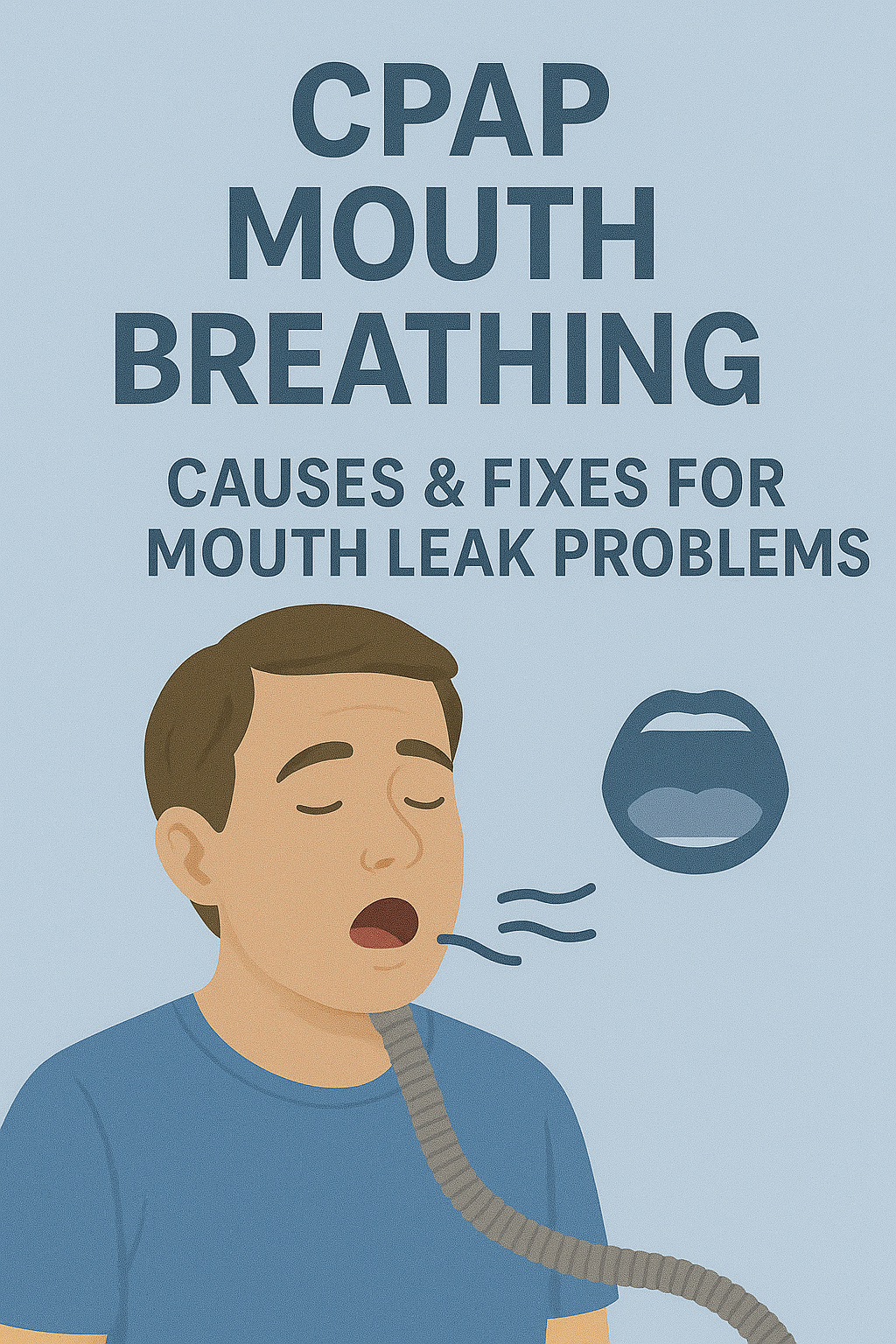
Mouth breathing is one of the biggest causes of CPAP discomfort — and a major reason beginners struggle with dryness, mouth leaks, and poor sleep quality. The good news? Mouth breathing is almost always fixable with the right strategy.
This guide explains why mouth leaks happen and the easiest ways to stop them.
Why CPAP Mouth Breathing Happens
Mouth breathing during CPAP occurs when:
- Your jaw relaxes during sleep
- Your nasal passages are congested
- Your pressure is too low or too high
- You use a nasal mask but can’t maintain nasal breathing
- Your chin naturally drops backward when lying on your back
Mouth leaks cause dry mouth, reduced therapy effectiveness, and mask noise.
1. Use a Chin Strap to Support the Jaw
A gentle chin strap helps keep your mouth closed without forcing it shut. This is the easiest and most common fix.
Related: Fixing CPAP Dry Mouth
2. Try Mouth Tape (Optional but Effective)
Mouth tape is a gentle adhesive strip placed over the lips to encourage nasal breathing. It’s popular among nasal pillow mask users.
Tip: Use CPAP-safe, breathable mouth tape — not regular tape.
3. Fix Nasal Congestion
If your nose is blocked, you will breathe through your mouth automatically. Fix the congestion and mouth leaks often disappear.
Try:
- Saline spray
- Nasal moisturizers
- Higher humidity
- A heated hose
Related: Fixing CPAP Congestion
4. Increase Humidity
Low humidity dries the throat and nose, triggering mouth breathing to compensate.
Fix: Raise humidifier level by 1–2 settings.
5. Make Sure Pressure Is Not Too Low
Pressure that is too low makes it feel harder to inhale through the nose, causing your mouth to open for extra airflow.
Related: CPAP Pressure Too High or Too Low
6. Switch to a Full Face Mask (If Needed)
If you continue to mouth breathe despite improvements, a full-face mask ensures therapy stays effective even when your mouth opens.
7. Improve Head Position While Sleeping
When your head tilts backward, your mouth naturally opens — especially for back sleepers.
Fix: A CPAP pillow helps maintain proper alignment and reduces jaw drop.
8. Use Hose Management to Reduce Pulling
When the hose pulls downward on your mask, it can break the seal and cause mouth opening to compensate.
Related: CPAP Hose Management Tips
Quick Summary: How to Stop CPAP Mouth Breathing
- Use a chin strap or mouth tape
- Fix congestion and dry nose
- Increase humidity
- Adjust pressure if too low
- Try a full-face mask if needed
- Improve sleep posture with a CPAP pillow
- Use hose management to prevent mask pulling
Final Thoughts
Mouth breathing is frustrating, but extremely fixable. With the right combination of jaw support, humidity, mask fit, and nasal comfort, most CPAP users eliminate mouth leaks quickly and enjoy significantly better sleep.
Explore more CPAP beginner guides: