NightlyCalm.com is a participant in the Amazon Services LLC Associates Program, an affiliate advertising program designed to provide a means for sites to earn fees by linking to Amazon.com. As an Amazon Associate, I earn from qualifying purchases.
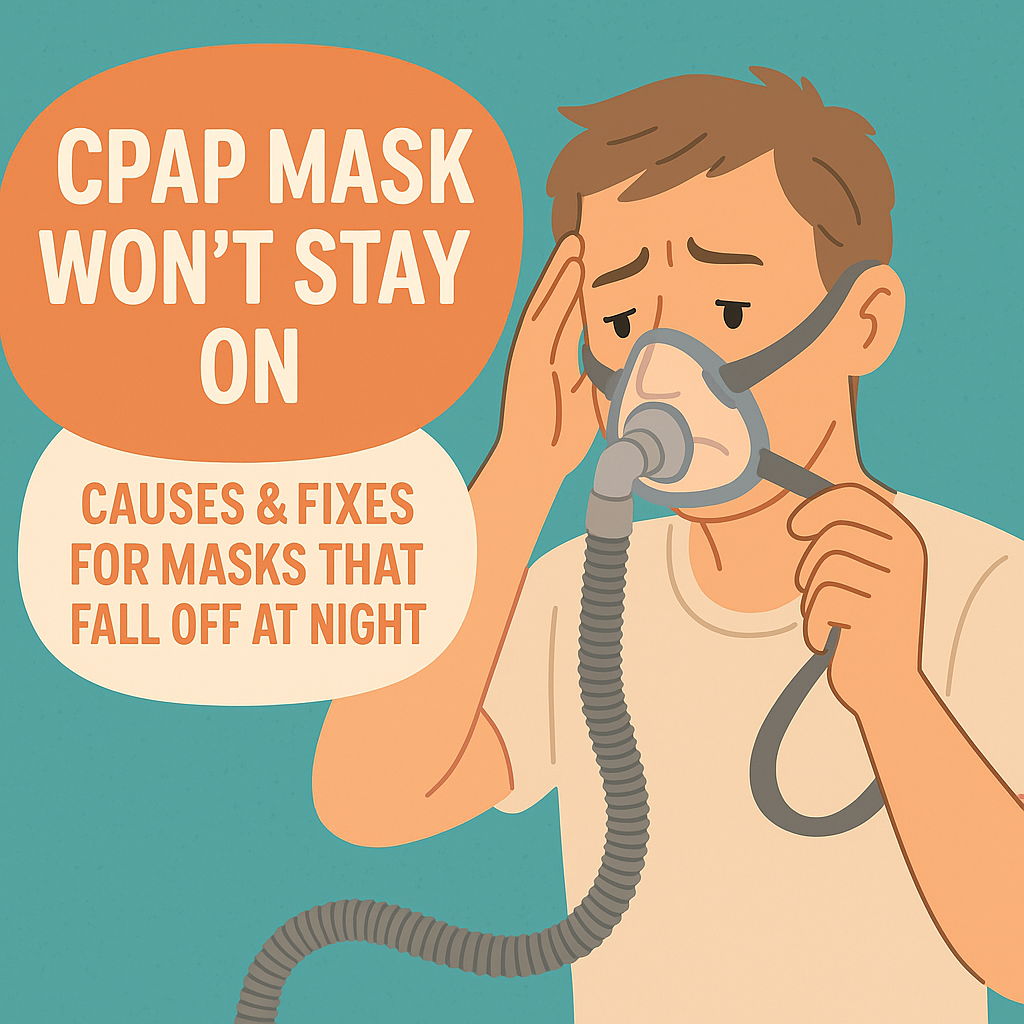
A CPAP mask that’s too tight or too loose can turn therapy into a nightly struggle. Tight masks cause pressure dents, soreness, and red marks. Loose masks cause leaks, noise, dry eyes, and poor sleep. The good news? Almost all strap problems are easy to fix with a few simple adjustments.
This guide explains the signs of an overly tight or loose mask and shows you how to get a perfect, comfortable seal.
How to Tell If Your Mask Is Too Tight
A CPAP mask is too tight if you notice:
- Red marks or dents that last hours after waking
- Pain on the cheeks, forehead, or nose bridge
- Headgear digging into the skin
- Increased leaks (tightening collapses the cushion)
- Feeling “trapped” or claustrophobic in the mask
How to Tell If Your Mask Is Too Loose
A mask is too loose if:
- You hear whistling, hissing, or puffing leaks
- The cushion shifts when you roll over
- Air blows into your eyes
- The mask slides down your face during sleep
- You need to over-tighten the straps just to get a seal
1. Let the Cushion Inflate Naturally
Many users overtighten because they think pressure equals sealing. Instead, the silicone cushion should “float” against your skin.
Fix: Put the mask on loosely → turn the machine on → lift the mask slightly → let it settle back and self-inflate.
This creates the correct seal automatically.
2. Adjust Straps in Tiny Increments
Large strap adjustments cause the mask to lose balance and leak.
Fix: Adjust each side by just 1–2 mm at a time until leaks stop.
Related: How to Stop CPAP Mask Leaks
3. Check Your Sleeping Position
Side sleepers often push the mask out of place without realizing it.
Fix: Use a CPAP pillow with mask cutouts to reduce shifting.
4. Replace Worn Mask Cushions
Old cushions stiffen, lose grip, and require constant tightening to stop leaks.
Fix: Replace cushions every 1–3 months.
5. Make Sure the Mask Is the Right Size
No amount of tightening or loosening will fix a mask that simply doesn’t fit your face.
Fix: Use your mask’s sizing guide or try a different size cushion.
6. Consider Switching Mask Styles
Some facial shapes never seal well with certain types of masks.
- Nasal pillows: minimal and great for reducing pressure marks
- Nasal masks: balanced comfort and sealing
- Full-face masks: best for mouth breathers but prone to nose-bridge pressure
7. Add Mask Liners for Comfort and Stability
Mask liners create cushion, reduce friction, and help maintain a stable seal even if straps are slightly loose.
8. Balance the Top and Bottom Straps
Many beginners overtighten the top straps, which causes leaks at the bottom — or vice versa.
Fix: Adjust all straps evenly and keep them symmetrical.
9. Avoid Tightening Straps While Sitting Up
Masks seal differently when lying down.
Fix: Always do final adjustments in your normal sleep position.
Quick Summary: Fixing Tight or Loose CPAP Masks
- Let the cushion inflate naturally
- Make tiny, even strap adjustments
- Replace worn cushions
- Use a CPAP pillow to reduce shifting
- Add mask liners for comfort
- Verify your mask size
- Switch mask styles if necessary
Final Thoughts
Mask tightness problems are incredibly common — and almost always fixable. With proper strap tension, fresh cushions, and a mask that matches your face shape, you can achieve a secure, comfortable seal that lasts all night.
Explore more CPAP beginner guides: