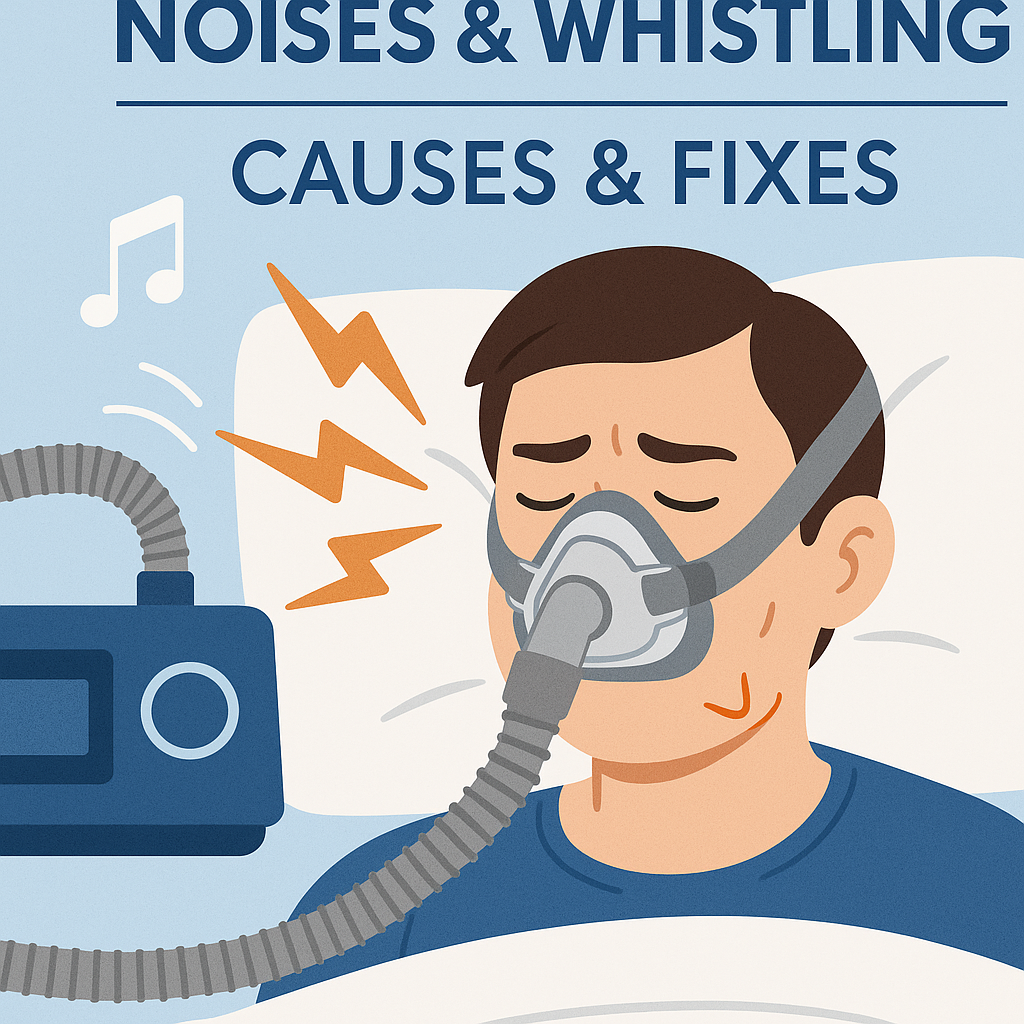
CPAP Mask Noises & Whistling: Causes & Easy Fixes
NightlyCalm.com is a participant in the Amazon Services LLC Associates Program, an affiliate advertising program designed to provide a means for sites to earn fees by linking to Amazon.com. As an Amazon Associate, I earn from qualifying purchases.
CPAP masks can make all kinds of noises — whistling, squealing, whooshing, buzzing, clicking, or popping. These sounds can wake you up, disturb your partner, and make therapy frustrating.
The good news? Nearly every CPAP noise has an easy fix once you pinpoint the cause.
This guide explains the most common CPAP mask noises and how to stop them quickly.
⭐ 1. Whistling Noise from Mask Leaks
Whistling almost always means air is escaping around the cushion — especially near the nose bridge, cheeks, or corners of the mask.
Fixes:
- Adjust the straps (not too tight, not too loose)
- Lift and reseat the mask so the cushion fully inflates
- Use a mask liner to improve sealing and comfort
Related: Stopping Mask Leaks
⭐ 2. High-Pitched Whistle from a Worn Cushion
When silicone cushions age, they stiffen and form tiny gaps.
Air squeezes through these micro-leaks, creating a sharp whistle.
Fix:
Replace mask cushions every 1–3 months.
⭐ 3. Clicking or Popping Sounds from Hose Tugging
If your tubing pulls on the mask, the elbow joint or frame can click or pop as it shifts under tension.
Fix:
Use hose management to lift the hose above your head.
Related: Hose Management Tips
⭐ 4. Whooshing Sound from a Loose Elbow or Connector
The swivel elbow where the hose attaches can loosen over time.
This creates a constant whooshing or rushing air sound.
Fix:
Press the connector firmly into place or replace it if worn.
⭐ 5. Loud Hissing from Exhaust Ports (Normal, but Can Be Louder)
All CPAP masks have built-in vents for exhaled air.
When this airflow hits your pillow, blanket, or hand, it becomes much noisier.
Fix:
Change sleep position or use a CPAP pillow with side cutouts.
⭐ 6. Gurgling or Sloshing Sounds (Water in the Hose)
If condensation forms inside the hose, you’ll hear gurgling, sloshing, or bubbling sounds — often called “rainout.”
Fix:
- Use a heated hose
- Increase room temperature to reduce condensation
- Add a hose cover
- Raise the hose higher than the humidifier
Related: Stopping CPAP Rainout
⭐ 7. Loud Airflow from Pressure Too High
Very high CPAP pressure can make the normal air vents sound much louder than usual.
Fix:
Enable EPR (expiratory pressure relief) or ask your sleep provider to review your pressure settings.
Related: Pressure Too High or Too Low
⭐ 8. Buzzing from a Loose Machine Filter
If the CPAP filter isn’t seated correctly, it may vibrate and produce a noise that seems like it’s coming from the mask.
Fix:
Remove the filter, reinsert it firmly, or replace it if dirty.
⭐ Quick Summary: How to Stop CPAP Mask Noises
- Fix leaks causing whistling
- Replace worn cushions
- Use hose management to prevent clicking
- Secure loose elbow connectors
- Use a CPAP pillow to quiet vent noise
- Prevent rainout to stop gurgling
- Adjust pressure if airflow is excessively loud
- Check or replace the machine filter
⭐ Final Thoughts
CPAP noises are annoying, but almost every sound has a simple fix. Once you identify the type of noise — whistling, clicking, gurgling, or whooshing — you can solve it with quick adjustments such as replacing a cushion, repositioning the hose, or improving the seal.
Most users achieve quiet, comfortable therapy after making just one or two small changes.
⭐ Explore More CPAP Comfort Guides