NightlyCalm.com is a participant in the Amazon Services LLC Associates Program, an affiliate advertising program designed to provide a means for sites to earn fees by linking to Amazon.com. As an Amazon Associate, I earn from qualifying purchases.
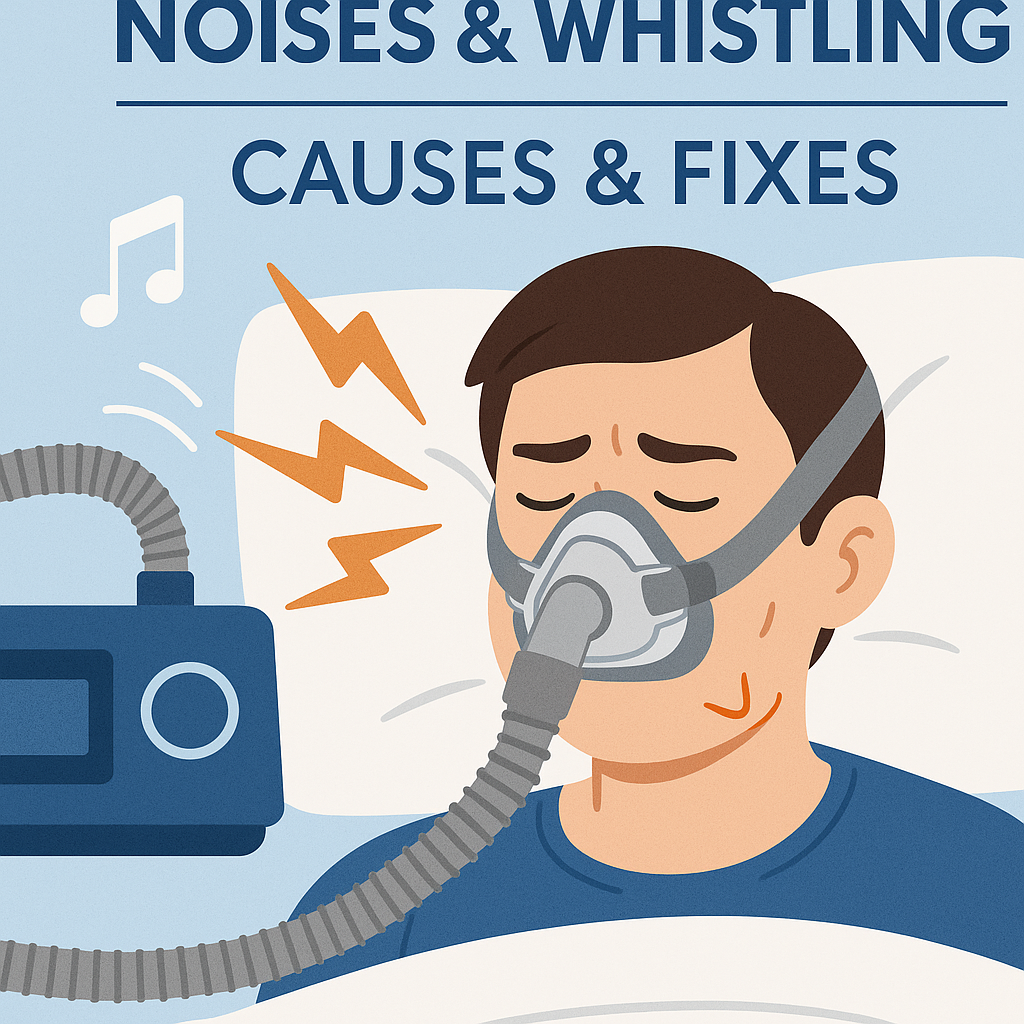
If your CPAP machine sounds loud, rattly, whistly, or “whooshy,” you’re not alone. Noise issues are extremely common — and thankfully, almost always easy to fix. Whether the sound is coming from the machine, the hose, the mask, or the room setup, a few adjustments usually bring your CPAP back to quiet operation.
This guide explains the most common CPAP noise problems and the solutions that actually work.
Related CPAP Guides:
1. Air Leaks Causing Whistling or Hissing
Even a **tiny mask leak** can create a sharp whistling or rushing sound.
Fixes:
- Reseat the cushion while the machine is running
- Loosen tight straps (overtightening collapses the seal)
- Clean the cushion daily to remove oils
- Replace worn cushions every 1–3 months
Related: How to Stop CPAP Mask Leaks
2. Hose Making “Wind” Noises
Fast-moving air can create whooshing or humming sounds inside the tubing.
Fixes:
- Use a hose cover to dampen noise
- Switch to heated tubing for smoother airflow
- Ensure the hose isn’t kinked or bent
3. Machine Vibrating Against the Nightstand
Even a quiet machine can sound loud if the surface underneath vibrates.
Fixes:
- Place the machine on a soft pad or mouse pad
- Move it to a lower shelf to reduce overall noise
- Make sure it isn’t touching the wall
These simple steps often cut machine noise dramatically.
4. Filter Is Dirty or Installed Incorrectly
A clogged or misaligned filter makes the machine work harder — and louder.
Fix: Replace filters every 2–4 weeks.
5. High Pressure Causing Louder Airflow
When pressure is too high, air moves faster through the mask, hose, and exhaust ports, making normal sounds louder.
Fixes:
- Try EPR (Expiratory Pressure Relief)
- Check for leaks (high pressure exaggerates every leak)
- Talk to your provider about adjusting pressure if discomfort persists
Related: CPAP Pressure Too High or Too Low
6. Water in the Hose (Gurgling or Sloshing)
If you hear bubbling, sloshing, or “aquarium sounds,” that’s **rainout** — condensation inside the hose.
Fixes:
- Use heated tubing
- Raise bedroom temperature slightly
- Keep the hose elevated above your head
Related: Stopping CPAP Rainout
7. Exhaust Air Hitting Your Blanket/Pillow
Every CPAP mask has intentional vent holes. If these vents blow against your bedding, the noise gets amplified.
Fixes:
- Change sleeping position
- Use a CPAP pillow with side cutouts
- Keep bedding away from the mask vents
8. Loose Hose Connection or Elbow Joint
If the elbow at the mask or humidifier isn’t clicked in fully, it can produce a steady whooshing or rumbling noise.
Fix: Press the connector firmly into place or replace worn parts.
9. Machine Placement Too Close to Your Ears
Even quiet machines (like the AirSense 10/11) sound louder when they’re placed high or close to your head.
Fix: Move the device 1–2 feet lower than bed level.
Even a slight repositioning makes a huge difference.
10. Mask Type or Size Isn’t Right for You
Some mask styles produce more vent noise than others.
If noise continues no matter what:
Try switching mask types:
- Nasal pillows: quietest option
- Nasal mask: moderate venting noise
- Full face mask: can be louder if leaks occur
Quick Summary: How to Quiet a Noisy CPAP
- Fix mask leaks (top source of CPAP noise)
- Use a hose cover or heated tubing
- Replace filters regularly
- Place the machine on a soft surface
- Change sleep position to avoid vent noise
- Check all hose connectors
- Raise humidity or reduce pressure if appropriate
- Try a quieter mask style
Final Thoughts
Most CPAP noise problems come down to simple fixes: leaks, airflow, tubing, filters, or machine placement. With the right adjustments, CPAP should be quiet enough that you barely notice it — helping you sleep better and stick with therapy long-term.
Explore more CPAP comfort guides: