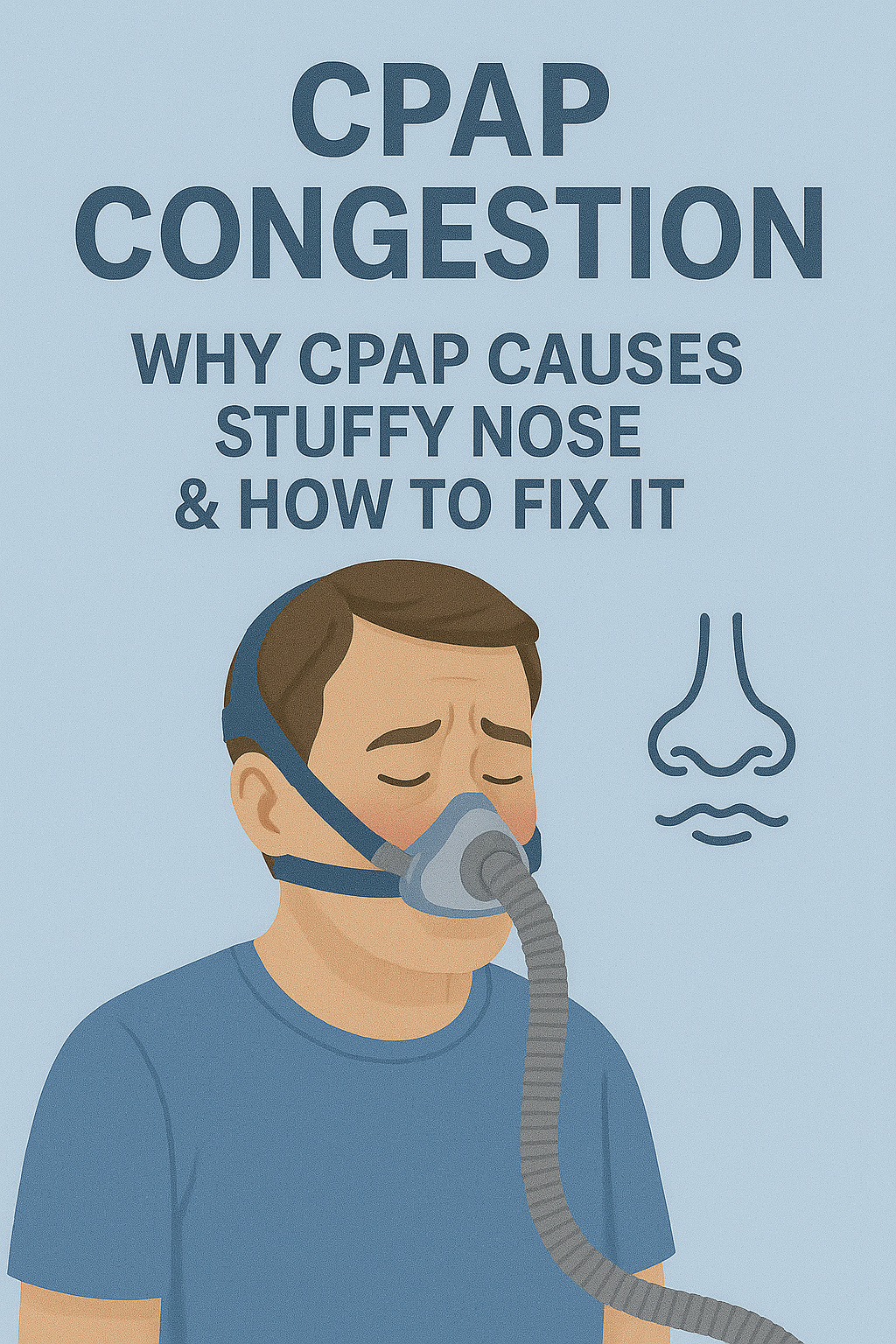
CPAP Congestion: Why CPAP Causes Stuffy Nose & How to Fix It
NightlyCalm.com is a participant in the Amazon Services LLC Associates Program, an affiliate advertising program designed to provide a means for sites to earn fees by linking to Amazon.com. As an Amazon Associate, I earn from qualifying purchases.
Many new CPAP users wake up feeling congested, stuffy, or unable to breathe clearly through their nose. This is extremely common — and almost always fixable.
CPAP can dry out your nasal passages, irritate the airway, or trigger swelling of the nasal tissues. Once you understand the cause, congestion becomes one of the easiest CPAP issues to solve.
This guide breaks down why congestion happens and the simple steps that help you breathe clearly again.
⭐ Symptoms of CPAP-Related Nasal Congestion
You may experience:
Stuffy or blocked nose upon waking
Difficulty breathing through the nose during therapy
Nasal pressure or sinus fullness
Increased mucus or runny nose
Mouth breathing because the nose feels blocked
These symptoms are typically caused by dryness, irritation, or mask-related airflow issues.
⭐ 1. Increase Humidity to Reduce Dryness
Insufficient humidity is the #1 cause of CPAP-related nasal congestion.
Dry air irritates the nasal lining, leading to swelling and blockage.
Fix:
Increase your humidifier level by 1–2 settings and test for improvement.
Related: CPAP Humidifier Tips
⭐ 2. Use a Heated Hose for Warm, Moist Air
A heated hose keeps moisture from cooling and drying out before it reaches your mask.
This greatly reduces nasal irritation.
⭐ 3. Use Saline Spray Before Bed
Saline spray adds moisture, reduces swelling, and helps clear nasal passages.
⭐ 4. Try a Nasal Gel for Overnight Moisture
A CPAP-safe nasal gel protects the nasal lining from dryness and prevents overnight blockage.
Mask leaks — especially near the nose or eyes — can irritate nasal tissues and cause swelling.
Fix:
Adjust the mask for a better seal
Replace worn cushions
Related: How to Stop CPAP Mask Leaks
⭐ 6. Consider Switching Mask Types
If your nasal mask increases congestion, switching to a nasal pillow mask may help.
These direct air more gently into the nostrils and feel less restrictive for some users.
⭐ 7. Adjust CPAP Pressure (If Needed)
Both low and high pressure can worsen congestion:
Too low: Leads to mouth breathing, which dries the airway
Too high: Irritates nasal tissues
Related: CPAP Pressure Too High or Too Low
⭐ 8. Increase Bedroom Humidity
Dry indoor air — especially during winter or with central heating — often worsens congestion.
Fix:
Use a small bedside humidifier to add moisture to the room.
Allergies are a major contributor to nasal swelling.
Common triggers include:
Dust
Pet dander
Seasonal pollen
Unchanged filters or dusty rooms
Small changes — like washing bedding more often or using an air purifier — can make a noticeable difference.
⭐ Quick Summary: How to Fix CPAP Congestion
Increase CPAP humidity
Use a heated hose
Apply saline spray or nasal gel
Fix mask leaks
Try a different mask style
Adjust pressure if needed
Increase bedroom humidity
Reduce allergens in the sleep environment
⭐ Final Thoughts
CPAP congestion is extremely common, but it’s also one of the easiest issues to fix.
Once your nasal passages stay moist and irritation-free, CPAP therapy becomes far more comfortable — and breathing becomes effortless throughout the night.
Explore more CPAP comfort guides: