 <img class=”alignnone size-full wp-image-252″ src=”https://nightlycalm.com/wp-content/uploads/2025/11/ChatGPT-Image-Nov-26-2025-03_51_54-PM.png” alt=”” width=”1024″ height=”1024″ />
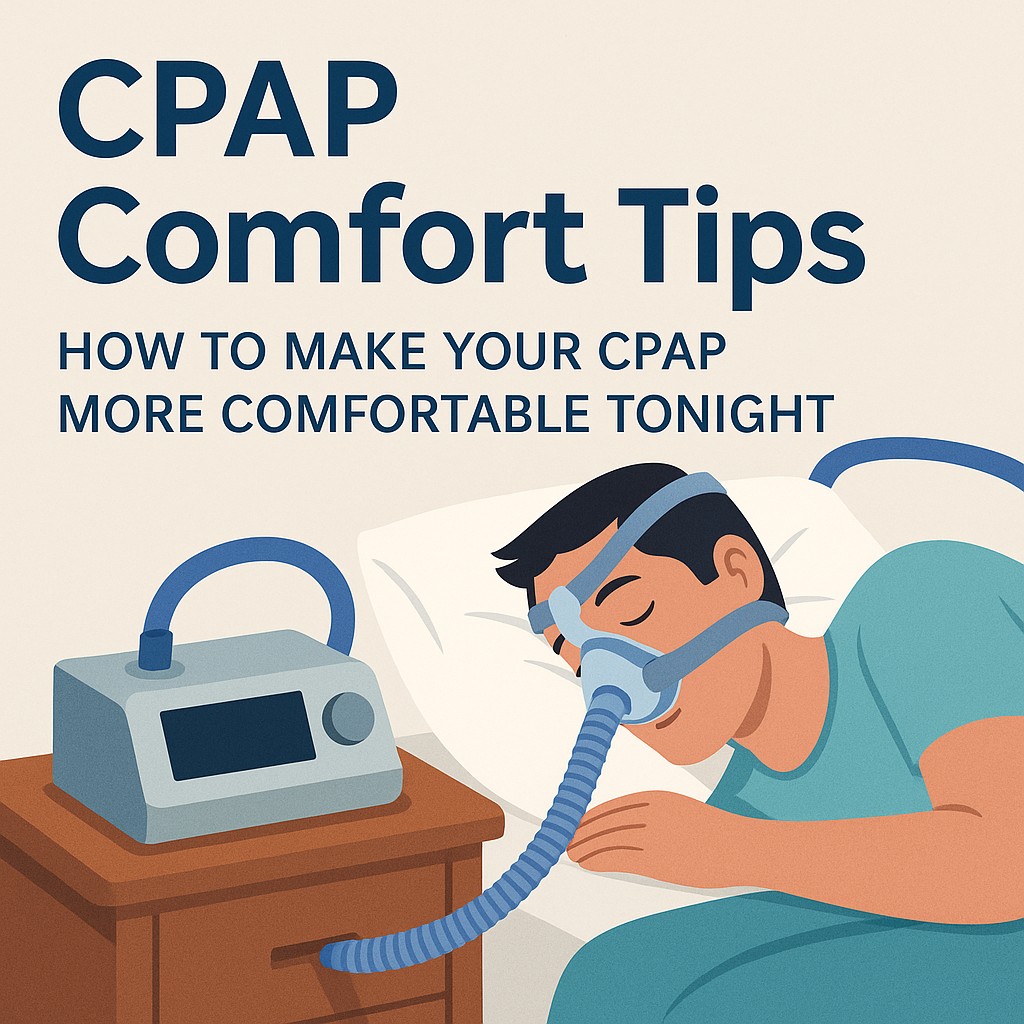
How to Make CPAP More Comfortable: Simple Fixes That Make a Big Difference
If you’re using CPAP but still struggling with discomfort, you’re not alone.
Most users experience dryness, leaks, pressure issues, or difficulty adjusting during their first weeks of therapy.
The good news?
Small adjustments can make CPAP dramatically more comfortable — often in just one night.
This guide covers the easiest, most effective comfort improvements for beginners and long-time users alike.
1. Adjust Your Humidifier Settings for Dryness or Congestion
Humidification is one of the fastest ways to improve comfort.
Increase humidity if you experience:
Dry nose
Dry mouth
Burning nostrils
Sore throat
Decrease humidity if you experience:
Excess moisture in the mask
Water in the hose (rainout)
Congestion that worsens with warm air
Some users sleep best with heated tubing, which helps maintain consistent moisture levels throughout the night.
2. Try a Different Mask or Cushion Size
Your mask has a bigger impact on comfort than any other CPAP component.
Consider switching mask type if:
Your cushion leaks frequently
You wake up with red lines
You feel claustrophobic
The mask feels heavy or bulky
Mask type quick guide:
Nasal pillows: Lightest and best for beginners
Nasal masks: Best balance of stability and comfort
Full face masks: Best for mouth-breathers or congestion
If the mask feels wrong, it probably is.
Trying a new style or size often solves the problem immediately.
3. Use the Ramp Feature to Ease Into Pressure
Ramp starts you at a lower pressure and gradually increases it as you fall asleep.
This helps if:
The pressure feels too strong when you first put on your mask
You have trouble relaxing
You’re new to CPAP
If you still feel overwhelmed, check whether your machine has AutoRamp (ResMed) or equivalent comfort settings.
4. Turn On Pressure Relief (EPR or Flex)
Pressure relief lowers the air pressure when you exhale.
This makes breathing feel more natural and reduces chest pressure, especially for new users.
Look for settings named:
EPR (ResMed)
Flex or A-Flex (Philips)
Expiratory Relief / Pressure Relief
Most users find this one change makes CPAP dramatically more comfortable.
5. Fix Mask Leaks for Better Comfort (and Better Sleep)
Leaks are the #1 cause of frustration for CPAP users.
To reduce leaks:
Adjust the straps after lying down (your face shape changes)
Try a different cushion size
Clean facial oils before bed
Replace old cushions every 1–3 months
If your mask shifts because you sleep on your side, consider a CPAP pillow with side cutouts to reduce pressure.
6. Reduce Nose or Mouth Dryness
Dryness is extremely common — and very fixable.
For dry nose:
Increase humidity
Use heated tubing
Apply a CPAP-safe nasal gel
Try a saline spray before bed
For dry mouth:
Switch to a full face mask
Use a chin strap
Increase humidity
Reduce mouth breathing by fixing nasal dryness at the same time
7. Manage Claustrophobia and Anxiety
Feeling closed in is more common than most new users realize.
Try this desensitization routine:
Wear your mask while awake, no machine
Then wear mask with machine for 5–10 minutes
Practice slow breathing
Use Ramp + EPR to soften airflow
Nasal pillow masks are the best option for users who dislike bulky gear.
8. Eliminate Rainout (Water in the Hose)
Rainout happens when warm humid air cools inside the tubing.
Fixes include:
Using heated tubing
Lowering humidity level
Increasing tube temperature
Keeping the machine lower than your head
Insulating the hose with a hose cover
Even one change usually stops rainout completely.
9. Improve Comfort With Small Accessories
These CPAP add-ons often make a big difference:
CPAP pillow
Hose hanger
Soft mask liners
Nasal gel
Chin strap
Heated tubing
CPAP cleaning wipes
They aren’t required — but they can dramatically improve the experience.
10. Know When to Contact Your Provider
Reach out to your DME or doctor if you experience:
Severe claustrophobia
Persistent leaks that don’t improve
Aerophagia (air swallowing)
Nosebleeds
Skin irritation that worsens
Pressure settings that feel too high
They can adjust settings, refit your mask, or recommend alternatives.
Final Thoughts
CPAP comfort isn’t about one big fix — it’s about small adjustments that work together to create a smooth, comfortable therapy experience.
Experiment with your mask, humidity, and pressure settings until you find what feels right.
With the right tweaks, CPAP becomes not just tolerable — but genuinely life-changing.