Sleep Apnea Treatment Options: A Complete Guide to What Really Works
Sleep apnea affects millions of people — often without them realizing it.
Because symptoms vary from mild snoring to severe breathing interruptions, the right treatment depends on the cause and severity of your condition.
This guide breaks down every major treatment option, from CPAP to natural therapies, so you can understand what works, why it works, and which approach might fit your situation.
⭐ 1. CPAP Therapy (Gold-Standard Treatment)
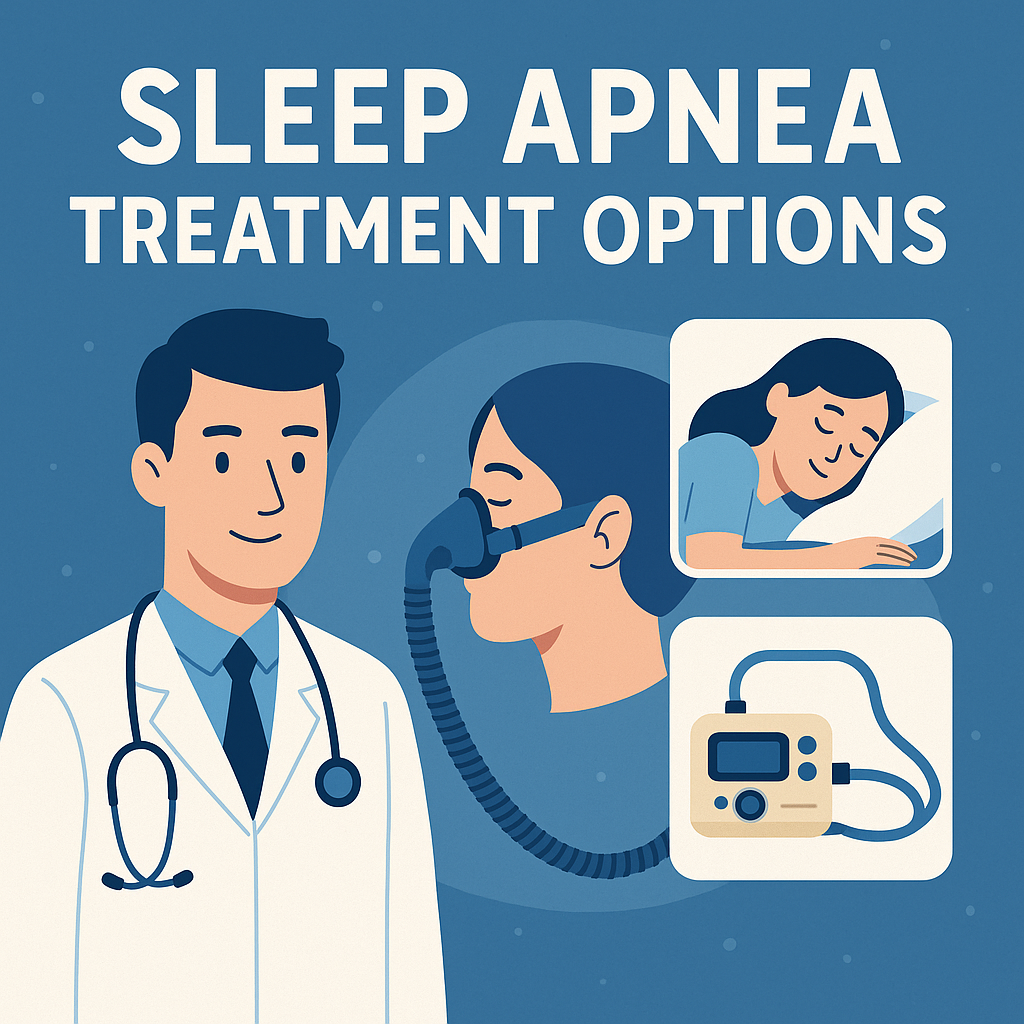
CPAP (Continuous Positive Airway Pressure) remains the most effective treatment for obstructive sleep apnea.
How it works:
A small machine pushes steady air pressure through a mask to keep your airway open.
Best for:
Moderate to severe sleep apnea
Loud snoring
Daytime fatigue
People who want the most reliable, clinically proven solution
Benefits:
Prevents airway collapse
Improves oxygen levels
Reduces morning headaches
Boosts energy and focus
Lowers long-term health risks
CPAP is highly effective, but comfort issues (dryness, leaks, pressure, claustrophobia) sometimes require adjustments — all of which can be fixed.
⭐ 2. Auto-CPAP (APAP) and BiPAP
APAP (Auto-Adjusting CPAP)
Adjusts pressure automatically throughout the night based on your breathing needs.
Best for: Variable breathing patterns, REM-related apnea, or people who need comfort flexibility.
BiPAP (Bi-Level Positive Airway Pressure)
Delivers one pressure for inhaling and a lower pressure for exhaling.
Best for:
People who cannot tolerate standard CPAP
High-pressure needs
Certain medical conditions
⭐ 3. Oral Appliances (Mandibular Advancement Devices)
A custom-fitted dental device pulls the jaw slightly forward to prevent airway collapse.
Best for:
Mild to moderate sleep apnea
People who cannot tolerate CPAP
Sleepers who travel frequently
Pros:
Small
Quiet
Comfortable for many users
Cons:
Less effective than CPAP
Requires dental fittings
May cause jaw soreness
⭐ 4. Weight Management (When Applicable)
Sleep apnea doesn’t only affect people who are overweight — but excess tissue around the neck and airway can worsen symptoms.
Even modest weight loss (5–10%) can help:
Reduce snoring
Improve oxygen levels
Lower apnea severity
This is most effective for people whose sleep apnea is linked to excess weight.
⭐ 5. Positional Therapy
Many people experience worse apnea when sleeping on their back.
Side sleeping can:
Reduce snoring
Improve breathing
Help keep the airway open naturally
Positional therapy devices, pillows, or gentle training techniques help maintain side-sleeping throughout the night.
⭐ 6. Surgery Options
Surgery may be considered when other treatments fail or when structural issues contribute to apnea.
Common procedures:
UPPP (Uvulopalatopharyngoplasty): Removes excess tissue in the throat
Septoplasty or Turbinate Reduction: Improves nasal airflow
Tonsillectomy/Adenoidectomy: Often used in children
Maxillomandibular Advancement: Moves the jaw forward to open the airway
Hypoglossal Nerve Stimulation (Inspire Device): An implanted device that stimulates breathing muscles
Surgery is not a first-line treatment, but it can help selected patients.
⭐ 7. Lifestyle & Natural Approaches
Natural strategies are not replacements for medical treatment, but they can improve symptoms and support overall sleep quality.
Helpful lifestyle changes include:
Side sleeping
Limiting alcohol before bed
Avoiding sedatives (when medically appropriate)
Improving nasal breathing with rinses or gels
Building a consistent sleep routine
Regular exercise
Quitting smoking
These approaches work best when paired with CPAP or other primary therapy.
⭐ 8. Supplemental Oxygen (Special Cases)
For people with severe oxygen drops or certain lung conditions, a doctor may prescribe supplemental oxygen alongside CPAP or BiPAP.
This is not a stand-alone treatment for sleep apnea.
⭐ 9. Mouth Taping or Chin Straps (Controversial / Not First-Line)
These methods aim to reduce mouth breathing but do not treat the airway obstruction itself.
Only use these under medical guidance, and never as a replacement for CPAP or medical therapy.
⭐ Which Treatment Is Right for You?
The best treatment depends on:
Your Apnea-Hypopnea Index (AHI)
Your symptoms
Anatomical factors
Other medical conditions
Your comfort with CPAP or alternatives
Most effective path for most people:
CPAP or APAP for airway support
Lifestyle changes for symptom reduction
Oral appliances or surgery when CPAP is not tolerated
A sleep specialist can help determine your exact needs.
⭐ Final Thoughts
Sleep apnea is highly treatable — and improving your breathing at night dramatically boosts your daytime energy, long-term health, and quality of life.
Whether through CPAP, lifestyle changes, positional therapy, or other treatments, you have many effective options.
With the right approach, restful nights and better health are absolutely within reach.