 https://nightlycalm.com/wp-content/uploads/2025/12/ChatGPT-Image-Dec-7-2025-09_52_14-AM.png
NightlyCalm.com is a participant in the Amazon Services LLC Associates Program, an affiliate advertising program designed to provide a means for sites to earn fees by linking to Amazon.com. As an Amazon Associate, I earn from qualifying purchases.
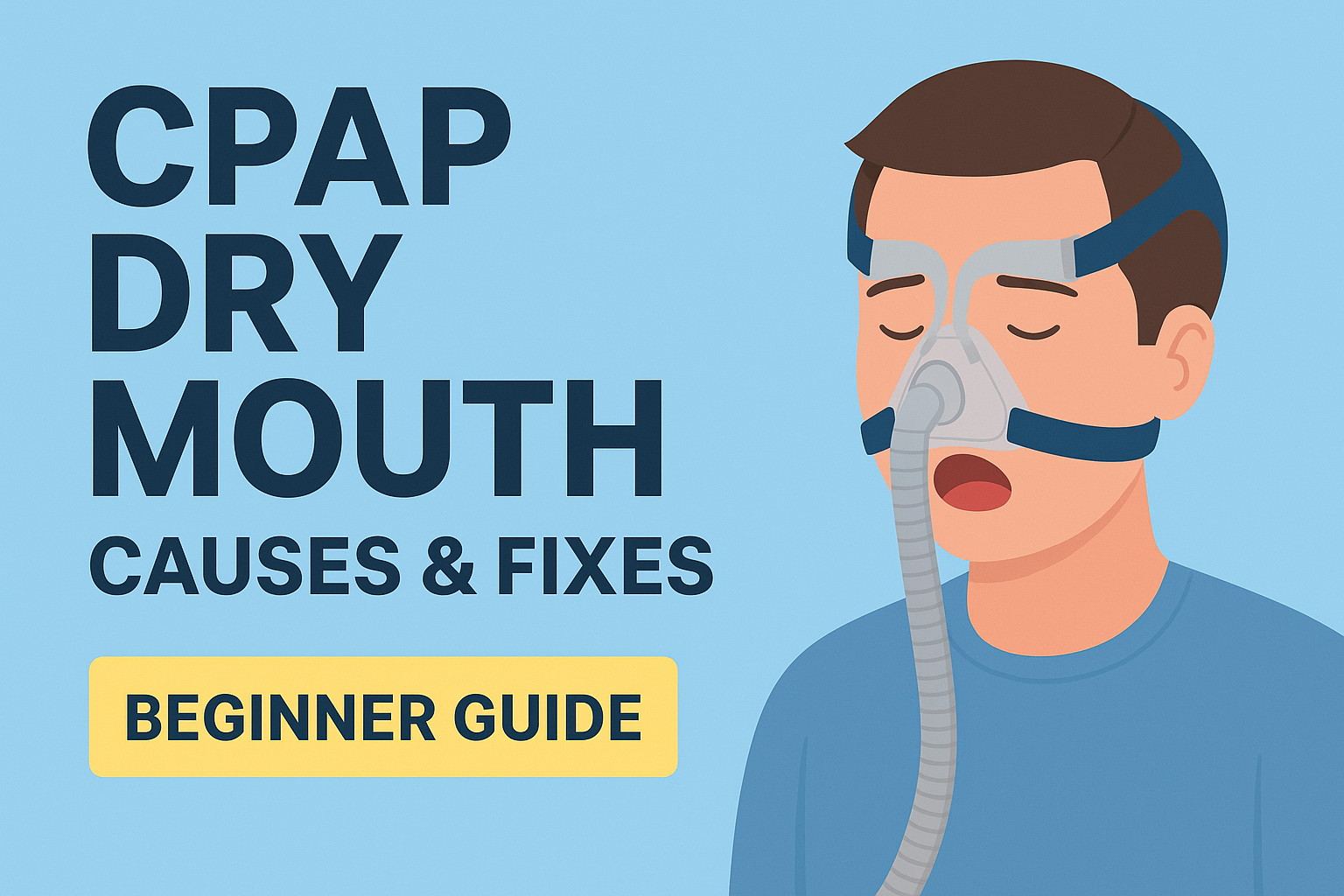
CPAP Dry Mouth: Causes, Fixes, and What Actually Helps
Introduction
Dry mouth is one of the most common — and most frustrating — problems people experience when starting CPAP therapy.. Many expect CPAP to improve sleep quickly, so waking up with a painfully dry mouth can feel discouraging or even alarming.
The good news is that CPAP-related dry mouth usually does not mean the therapy is failing. In most cases, it happens because of airflow patterns, pressure settings, or breathing habits during sleep — all of which are often adjustable.
This guide explains why CPAP can cause dry mouth, what tends to make it worse, and which fixes actually help most people. If you’re dealing with dryness, soreness, or discomfort when you wake up, this article will help you understand what’s happening and what to try first.
In most cases, CPAP-related dry mouth is mechanical, not medical, and improves once the underlying cause is addressed.
Why CPAP Can Cause Dry Mouth
CPAP works by delivering a steady stream of pressurized air to keep the airway open during sleep. While this airflow is essential for treating sleep apnea, it can also dry out sensitive tissues in the mouth if conditions aren’t quite right.
During sleep, saliva production naturally decreases. When pressurized air passes over the mouth for hours at a time — especially if the mouth opens during sleep — moisture can evaporate faster than the body can replace it. Over time, this leads to dryness, irritation, and that uncomfortable “cotton mouth” feeling in the morning.
Dry mouth is more likely to occur when airflow is escaping through the mouth rather than being directed solely through the nose. This is why breathing patterns, mask fit, and humidity settings all play a role.
Common Causes of Dry Mouth With CPAP
Mouth Breathing During Sleep
One of the most common causes of CPAP dry mouth is mouth breathing. Even people who breathe through their nose during the day may switch to mouth breathing at night, especially if nasal passages become congested.
When the mouth stays open, pressurized air flows directly across oral tissues, drying them out quickly. This can happen even if you’re wearing a nasal mask that fits well.
Mask Leaks Redirecting Airflow
Poor mask fit can cause air leaks that travel upward or outward instead of staying sealed. Some leaks are subtle and may not wake you, but they can still dry out the mouth over several hours.
Leaks often worsen with movement during sleep or if mask straps are too loose or unevenly adjusted.
Incorrect Humidity Settings
Humidification is designed to add moisture to the air you breathe, but settings that are too low — or sometimes too high — can contribute to dryness.
If humidity is insufficient, airflow remains dry throughout the night. On the other hand, excessive humidity can cause congestion, which may push you toward mouth breathing and indirectly worsen dry mouth.
Higher Pressure Settings
Higher CPAP pressure increases airflow speed. Faster airflow can evaporate moisture more quickly, especially if air escapes through the mouth.
This doesn’t mean pressure is “wrong,” but it may require better humidity support or mask adjustments to stay comfortable.
Nasal Congestion or Blockage
If your nose feels blocked at night due to allergies, dryness, or irritation, your body may naturally switch to mouth breathing. Even temporary congestion can be enough to cause dry mouth by morning.
What Makes CPAP Dry Mouth Worse
Several lifestyle and environmental factors can make CPAP-related dry mouth more noticeable.
Sleeping on your back can allow the jaw to relax open more easily. Dehydration during the day can reduce saliva production at night. Alcohol before bedtime can worsen dryness and increase mouth breathing. Dry bedroom air, especially in winter, can also contribute.
When these factors stack together, dry mouth can feel severe even if CPAP settings are mostly correct.
Fixes That Help Most People
Adjusting Humidity Settings
Increasing humidification slightly is often the first and easiest fix to try. Small adjustments can make a noticeable difference within a few nights.
If you already use higher humidity and feel congested, lowering it slightly may help nasal breathing and reduce mouth breathing.
Changes should be made gradually, one setting at a time, and given a few nights before deciding whether they helped.
Improving Mask Fit
A secure but comfortable mask seal reduces airflow leaks that contribute to dryness. Mask adjustments should feel snug but not tight, and straps should be evenly balanced.
If leaks persist despite adjustments, a different mask style may be worth considering.
Addressing Mouth Breathing
Keeping the mouth closed during sleep can significantly reduce dryness. This may involve improving nasal comfort, adjusting sleeping position, or using supportive accessories designed to encourage nasal breathing.
These options are not necessary for everyone, but they can help in persistent cases.
Supporting Nasal Comfort
Nasal dryness or congestion often drives mouth breathing. Addressing nasal comfort can indirectly reduce dry mouth by making nasal breathing easier throughout the night.
Checking Bedroom Air Quality
If the room air is very dry, adding moisture to the environment may help reduce overall dryness during sleep.
When Dry Mouth May Signal a Bigger Issue
Occasional dryness is common, especially early in CPAP therapy. However, persistent severe dry mouth, mouth sores, dental discomfort, or changes in taste may warrant a conversation with your provider or dentist.
These symptoms don’t necessarily mean CPAP is harmful, but they may indicate that adjustments are needed or that another issue is contributing.
If You’re Experiencing Multiple CPAP Problems
Dry mouth often overlaps with other CPAP issues such as mask leaks, discomfort, nasal irritation, or frequent awakenings. Addressing one problem can sometimes improve several others.
If you’re dealing with more than one issue, it may help to step back and work through them methodically.
👉 You can start with the CPAP Resource Hub, which walks through common CPAP problems and practical ways to approach them.
Quick Summary
-
Dry mouth is a common CPAP issue and usually fixable
-
Mouth breathing and air leaks are the most frequent causes
-
Humidity, mask fit, and nasal comfort matter more than most people realize
-
Small adjustments often make a big difference
-
Persistent symptoms should be discussed with a provider
With the right setup, CPAP should support your sleep — not leave you uncomfortable. Most dry mouth issues improve once airflow, humidity, and breathing patterns are aligned.
What Causes Dry Mouth With CPAP?
Related CPAP Guides:
Dry mouth usually comes from one of these three things:
- Your mouth opens during sleep (most common)
- Low humidity from the CPAP machine
- Mask leaks around the cushion
Let’s go through each cause and how to fix it.
1. Mouth Opening During Sleep
If you use a nasal pillow or nasal mask, air can escape through your mouth. This dries out your throat and reduces CPAP effectiveness.
Fix: Use a gentle CPAP chin strap to keep your jaw supported.
If dry mouth continues even with a chin strap, you may need a full face mask.
2. Low CPAP Humidity Settings
CPAP machines add moisture to the air to prevent dryness. If humidity is too low, you may wake up with a dry mouth, throat, or nose.
Fix: Increase humidity 1–2 levels at a time until dryness improves.
You can also use humidifier cleaning tablets to keep your chamber fresh.
3. Mask Leaks
If your mask leaks, air may escape and cause dryness — especially if the cushion is worn, dirty, or not sealing well.
Fix: Clean the mask cushion daily and ensure straps are not overtightened.
See: How to Stop CPAP Mask Leaks at Night
4. Mouth Breathing Even With a Chin Strap
Some users still breathe through their mouth even when using a chin strap. In this case, switching to a full face mask is often the best solution.
5. Try a Moisturizing CPAP-Safe Mouth Spray
Some CPAP users find relief using a moisturizing spray before bed. These sprays coat your mouth and throat to reduce dryness.
6. Use Heated Tubing for Extra Moisture
Heated CPAP tubing keeps air warm and humid all the way to your mask. This prevents condensation (“rainout”) and dryness.
7. Stay Hydrated Before Bed
Dehydration increases dry mouth symptoms. A small glass of water before bedtime can help — as long as you avoid big drinks that lead to nighttime bathroom trips.
Summary: Quick Fixes for CPAP Dry Mouth
- Use a chin strap to keep your mouth closed
- Increase CPAP humidity settings
- Try a CPAP pillow to reduce mask shifting
- Switch to a full face mask if needed
- Use heated tubing for more moisture
- Clean your mask cushion daily
Final Thoughts
Dry mouth is frustrating, but with a few adjustments, most CPAP beginners solve it quickly. Start with humidity, mask fit, and mouth support, and you’ll see a big improvement in comfort and sleep quality.
For more beginner-friendly CPAP guides, explore:
- How to Stop CPAP Mask Leaks at Night
- Best CPAP Pillows for Side Sleepers
- CPAP Essentials for Beginners
Frequently Asked Questions
Why do I get dry mouth even when using CPAP?
Dry mouth usually happens because your mouth opens during sleep, humidity is too low, or your mask leaks. These issues reduce moisture and cause air to escape through your mouth.
How do I stop mouth breathing with CPAP?
A gentle chin strap helps keep the jaw closed. If mouth breathing continues, a full face mask may be necessary for complete coverage.
Should I increase humidity to fix CPAP dry mouth?
Yes. Raising humidity 1–2 levels often helps. Just increase slowly until dryness improves without causing rainout.
Can mask leaks cause dry mouth?
Absolutely. When the mask leaks, air pressure drops, leading to dryness and reduced therapy effectiveness. Cleaning or replacing the cushion usually fixes this.
Does heated tubing help with dry mouth?
Heated tubing delivers warm, moist air all the way to the mask, improving comfort and reducing dryness caused by cool airflow.
Is a full face mask better for dry mouth?
Yes, if you consistently breathe through your mouth. A full face mask keeps therapy pressure stable even when your mouth opens.