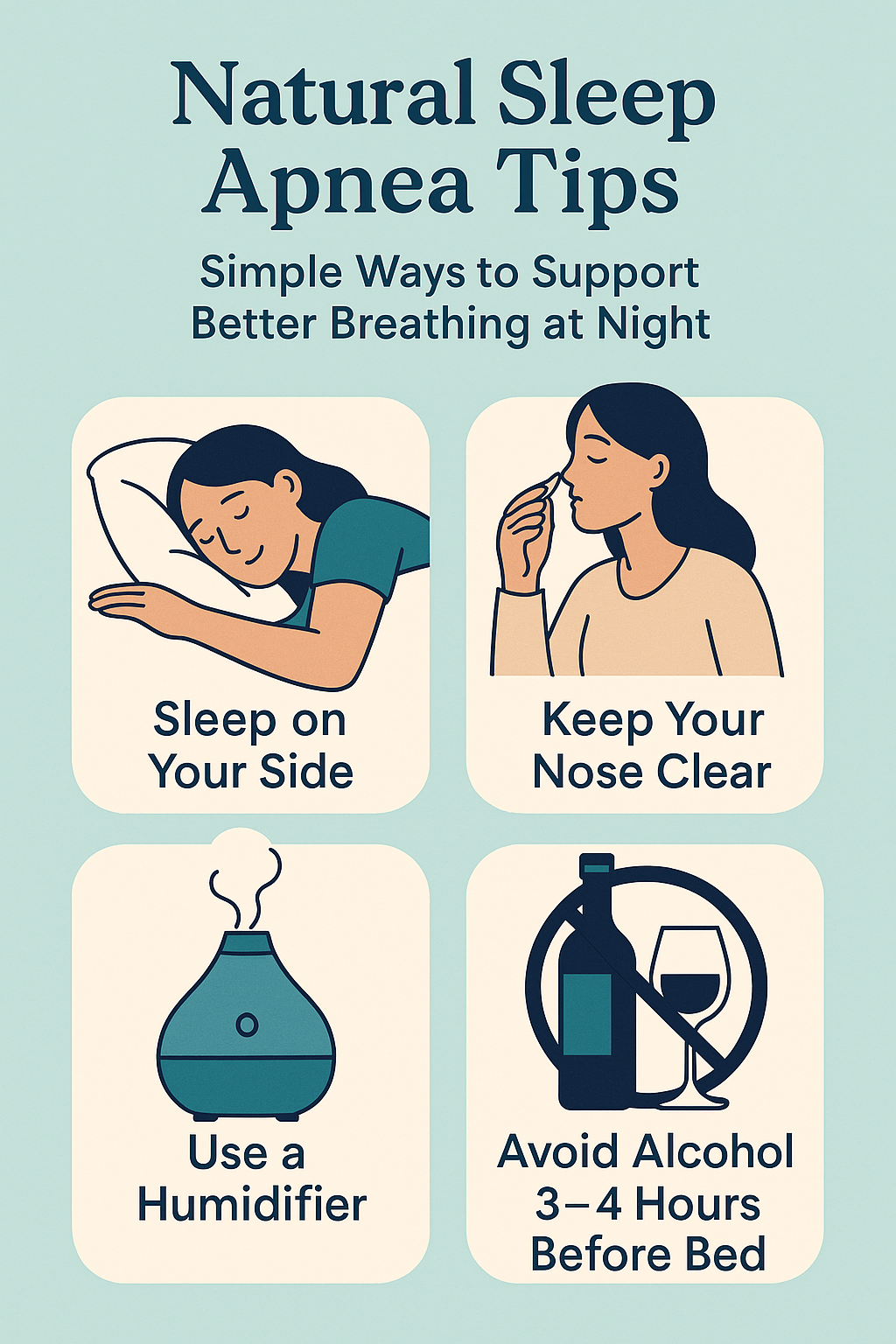
Looking for natural ways to improve sleep apnea? Discover lifestyle changes, breathing techniques, sleep position tips, weight strategies, and habits that can reduce symptoms.
Natural Tips to Improve Sleep Apnea: What Really Helps
While medical treatment like CPAP is the most effective way to treat sleep apnea, several natural lifestyle changes can reduce symptoms, improve sleep quality, and make medical therapy more successful.
Here are the best evidence-based approaches.
⭐ 1. Sleep on Your Side
Back-sleeping worsens apnea for many people because the tongue and soft tissues fall backward.
Side-sleeping can significantly reduce:
-
Snoring
-
Breathing pauses
-
CPAP pressure needs
Try a body pillow or positional device if you roll onto your back.
⭐ 2. Maintain a Healthy Weight
Extra tissue around the neck and airway increases collapse during sleep.
Even modest weight loss can:
-
Reduce apnea severity
-
Improve snoring
-
Lower required CPAP pressure
Weight loss alone is not a cure — but it helps more than most people realize.
⭐ 3. Avoid Alcohol Before Bed
Alcohol relaxes throat muscles, which can dramatically worsen apnea.
Avoid drinking 2–3 hours before sleep.
⭐ 4. Exercise Regularly
Exercise improves:
-
Breathing strength
-
Airway stability
-
Weight management
-
Sleep quality
Even without weight loss, exercise alone has been shown to reduce apnea severity.
⭐ 5. Perform Airway or Throat Exercises
“Orofacial myofunctional therapy” strengthens the muscles of the tongue and airway.
Daily exercises can:
-
Reduce snoring
-
Improve daytime breathing
-
Improve CPAP comfort
They don’t replace medical therapy but are excellent supplemental support.
⭐ 6. Treat Nasal Congestion
Blocked nasal passages increase mouth breathing and worsen apnea.
Helpful natural solutions:
-
Saline rinses
-
Humidifiers
-
Steam inhalation
-
Nasal strips (nighttime)
-
Allergy control
Clear nasal airflow makes breathing easier whether or not you use CPAP.
⭐ 7. Stick to a Consistent Sleep Schedule
Irregular sleep worsens:
-
Apnea symptoms
-
Daytime sleepiness
-
Body’s ability to regulate breathing
Aim for consistent sleep and wake times.
⭐ 8. Avoid Heavy Meals Near Bedtime
Large meals increase airway resistance and make breathing harder during sleep.
Try to finish eating at least 2–3 hours before bed.
⭐ 9. Quit Smoking
Smoking irritates the airway, making it more likely to collapse.
Quitting leads to:
-
Less inflammation
-
Better airflow
-
Reduced apnea events
⭐ 10. Use a Humidifier in Your Bedroom
Moist air keeps the airway comfortable and reduces snoring and dryness.
Final Thoughts
Natural approaches can make a meaningful improvement in sleep apnea symptoms — especially when combined with a medical treatment plan like CPAP or an oral appliance.
Start with the easiest changes and build from there.