
Introduction
CPAP therapy relies on air pressure to keep the airway open during sleep. When that pressure feels uncomfortable, overwhelming, or ineffective, it can quickly make CPAP feel hard to tolerate.
Thank you for reading this post, don't forget to subscribe!Some people feel like the pressure is too strong — forcing air into their lungs or making it difficult to exhale. Others feel like the pressure isn’t doing enough, leaving them waking up tired or still struggling with symptoms.
Pressure problems are very common, especially during the adjustment phase. They do not mean CPAP is failing, and they do not mean you are doing something wrong. In most cases, pressure discomfort comes down to how the settings interact with breathing patterns, sleep position, mask fit, and leaks.
This guide explains how CPAP pressure works, what “too high” and “too low” pressure can feel like, and what usually helps make therapy more comfortable.
What CPAP Pressure Actually Does
CPAP pressure is measured in centimeters of water (cmH₂O). The purpose of that pressure is to gently hold the airway open so it does not collapse during sleep.
The pressure is not meant to force breathing or inflate the lungs. Instead, it acts like a small cushion of air that keeps the airway stable. When pressure feels uncomfortable, it is usually because the body is still adapting or because other factors — such as leaks or mask fit — are interfering.
Some machines deliver a fixed pressure, while others adjust automatically throughout the night. Either way, comfort depends on how pressure interacts with your breathing and sleep habits.
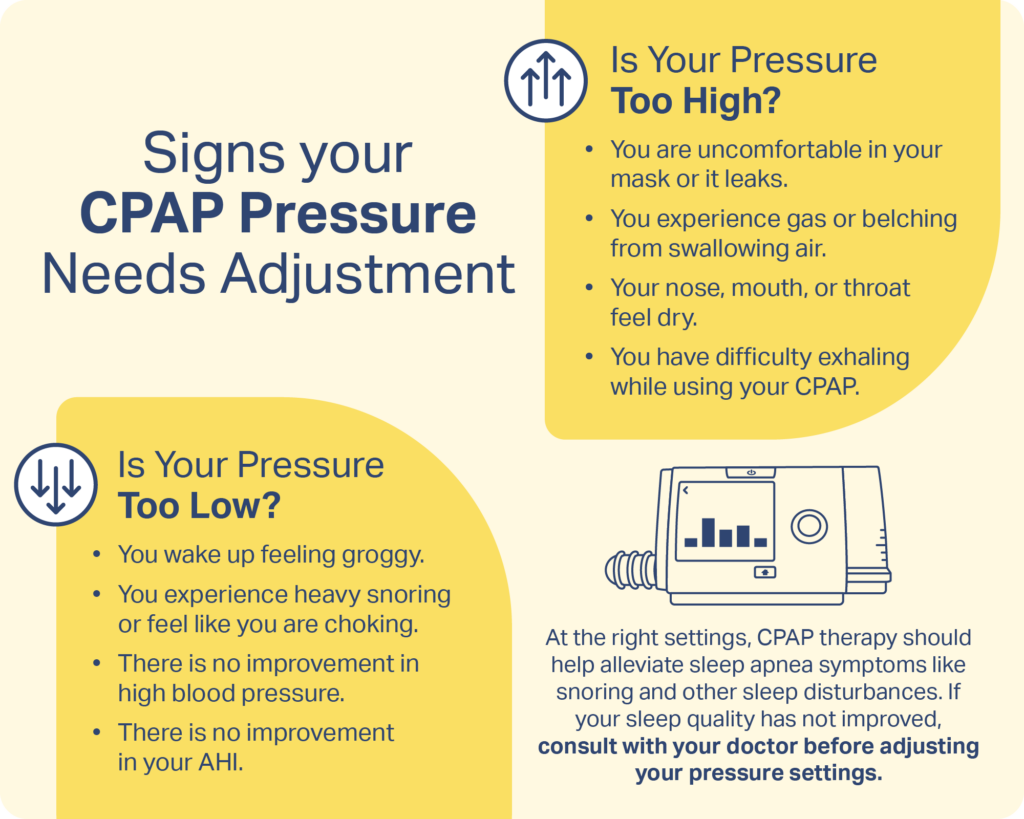
Signs CPAP Pressure May Feel Too High
Pressure that feels too strong can cause several sensations that make CPAP uncomfortable.
Some people feel like air is rushing in too forcefully, especially when trying to fall asleep. Others feel resistance when exhaling, which can lead to shortness of breath or anxiety.
Common signs pressure may feel too high include:
-
Difficulty exhaling comfortably
-
Feeling “blasted” with air
-
Increased mask leaks
-
Frequent awakenings
-
Chest discomfort or bloating
These sensations are often more noticeable early in therapy and may ease with time and adjustment.
Signs CPAP Pressure May Feel Too Low
Pressure that is too low can feel less obvious but still affect sleep quality.
When pressure is insufficient, the airway may not stay fully open. This can result in ongoing symptoms even though CPAP is being used consistently.
Common signs pressure may feel too low include:
-
Persistent snoring while using CPAP
-
Waking up tired or unrefreshed
-
Continued dry mouth or gasping sensations
-
Feeling like CPAP “isn’t doing anything”
Low pressure is sometimes mistaken for poor mask fit or leaks, which is why pressure issues are often interconnected with other CPAP problems.
Why Pressure Problems Happen
Pressure discomfort is rarely caused by a single factor.
Leaks can cause pressure changes as the machine tries to compensate. Mask discomfort can make pressure feel stronger than it actually is. Sleeping position can alter airway shape, affecting how much pressure is needed.
Stress, anxiety, and unfamiliar sensations can also amplify awareness of airflow, making normal pressure feel uncomfortable at first.
In many cases, pressure problems are part of a broader setup issue rather than a true pressure mismatch.
What Usually Helps with CPAP Pressure Discomfort
Allowing Time to Adjust
For many people, pressure discomfort improves naturally as the body adapts. Breathing against positive pressure feels unfamiliar at first, but tolerance often increases over the first few weeks.
This adjustment period is normal and does not mean CPAP is unsuitable.
Checking for Mask Leaks
Leaks can make pressure feel unstable or excessive. Air escaping from the mask can cause the machine to increase pressure unnecessarily.
Addressing leaks often reduces pressure discomfort without changing any settings.
Using Comfort Features When Available
Many CPAP machines include comfort features designed to make pressure easier to tolerate, such as:
-
Ramp features that start pressure low and increase gradually
-
Exhalation relief that reduces pressure slightly during exhale
These features do not reduce therapy effectiveness for most people and often improve comfort significantly.
Evaluating Mask Fit and Style
A poorly fitting mask can exaggerate pressure sensations. Some mask styles distribute airflow more evenly, while others concentrate pressure in certain areas.
Switching mask styles or adjusting fit can make pressure feel more manageable.
How Pressure Problems Connect to Other CPAP Issues
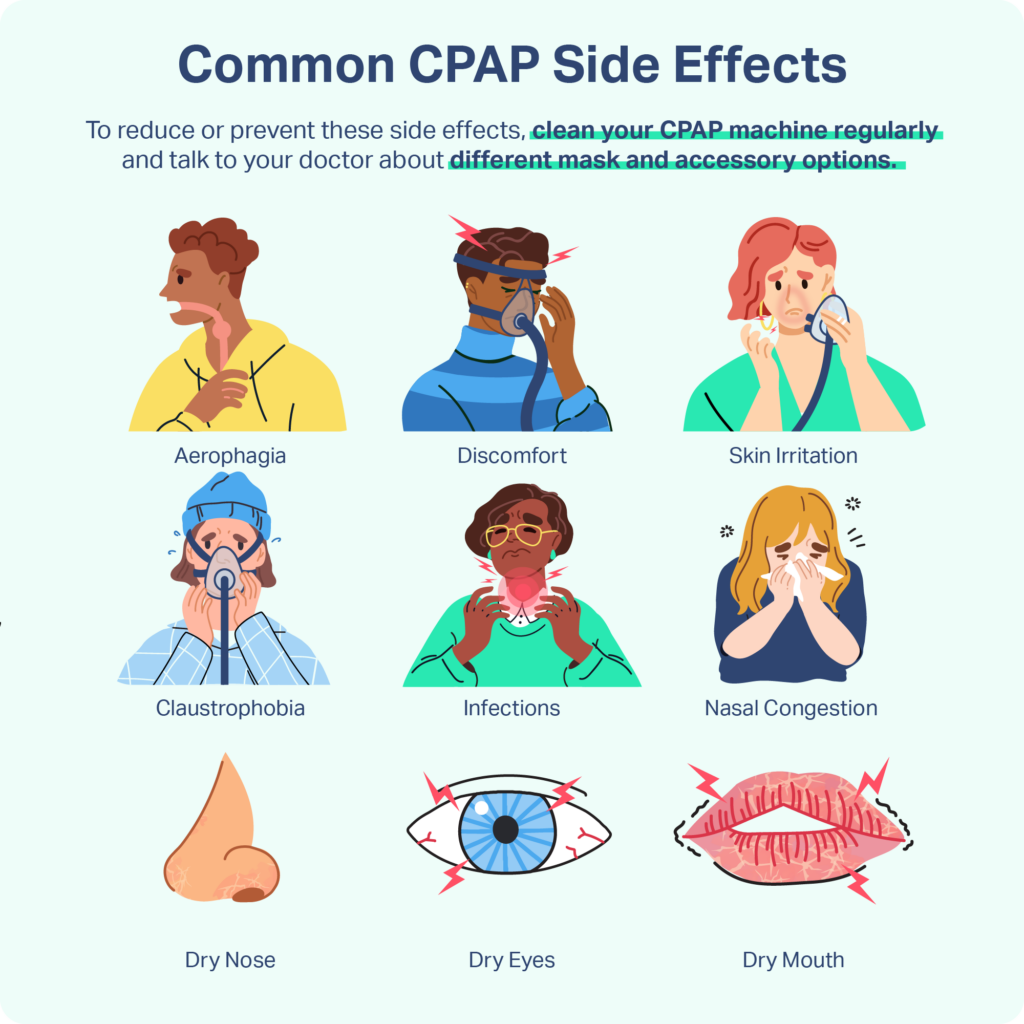
Pressure discomfort often overlaps with mask leaks, dry mouth, dry eyes, and mask discomfort. These issues influence one another, and fixing one often improves others.
For example, resolving leaks may stabilize pressure, which then reduces discomfort and awakenings.
👉 The CPAP Resource Hub explains how common CPAP issues connect and how to approach them step by step.
When Pressure Problems Mean Something Needs to Change
Occasional discomfort is common, especially early on. However, persistent difficulty breathing, ongoing sleep disruption, or avoidance of CPAP use suggests that adjustments are needed.
This may involve reviewing comfort settings, mask fit, or pressure ranges with a sleep provider. CPAP pressure should support sleep, not make it harder.
Quick Summary
CPAP pressure problems are common and usually fixable. Pressure that feels too high or too low often reflects leaks, mask issues, or the body’s adjustment process rather than a fundamental problem with CPAP therapy.
Small changes, patience, and proper setup usually lead to improved comfort. With the right adjustments, CPAP pressure can feel natural and supportive instead of overwhelming.