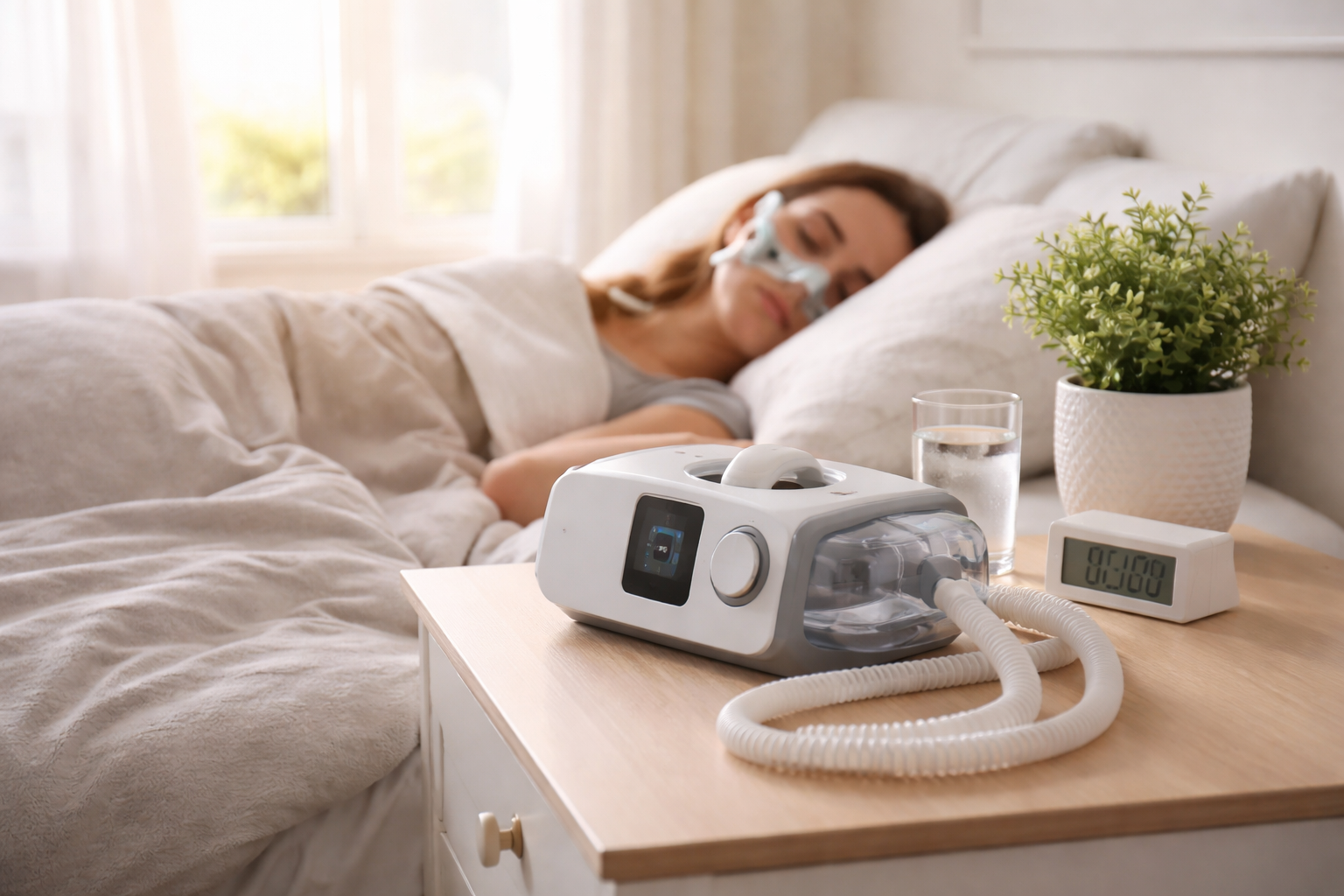
CPAP Essentials Guide (2025): Complete Beginner Resource

CPAP Essentials Guide (2025): Complete Beginner Resource

Thank you for reading this post, don't forget to subscribe!

🔹 Hub Pages (Top Priority for Interlinking)

  • CPAP Resource Hub

  • Sleep Apnea Resource Hub

  • Snoring Hub

# CPAP Essentials Guide
Everything you need in one place — troubleshooting, comfort fixes, cleaning routines, and beginner gear recommendations.

## 🛠️ CPAP Troubleshooting (Most Common Problems)
CPAP Troubleshooting (Most Common Problems)

Mask Leaks

Claustrophobia / Panic with Mas

Dry Eyes

Air Blowing Into Eyes

Not Getting Enough Air (Air Hunger)

Pressure Too High / Too Low

Nasal Congestion from CPAP

Aerophagia (Stomach Bloating)

💧 Water & Humidifier Problems

CPAP Rainout (Water in Hose)

Water in the Mask

Cloudy Water Chamber  / Smells / Overfilling

Humidity Settings Guide (Daily, Seasonal, Expert Tips)

10 Easy Fixes to Make CPAP More Comfortable

🧼 Cleaning & Maintenanc

Best CPAP Cleaning Wipes

Best CPAP Filters

Best Humidifier Cleaning Tablets

🎯 Beginner CPAP Gear Guides

Best Cpap Masks for Beginners

Best CPAP Machines (2025 Guide)

Best CPAP Pillows

Best Mask Liners for Comfort

If you’re new to CPAP, you’re in the right place.
This guide is designed to make CPAP simple, comfortable, and stress-free, even if you’re feeling overwhelmed or unsure where to start.

CPAP therapy is one of the most effective treatments for sleep apnea — but most people struggle during the first few weeks. The mask feels strange. Air pressure can feel too strong or not strong enough. Your mouth might get dry. Your nose might get stuffy. You might wake up frustrated, wondering if you’re doing something wrong.

Don’t worry.
Every beginner feels this way — and every problem has a solution.

This guide walks you step-by-step through everything you need to sleep comfortably with CPAP. Think of it as your one-stop CPAP home base.

CPAP Essentials PDF


Quick Navigation

  • CPAP Basics

  • Choosing the Right Mask

  • Comfort Fixes for Beginners

  • Humidifier & Climate Settings

  • Cleaning & Maintenance

  • Hose Management & Bed Setup

  • Troubleshooting (Fast Fixes)

  • Your CPAP Success Routine

  • Beginner FAQs


SECT

ION 1 — CPAP Basics: What Every Beginner Should Know

🔹 Beginner Pages

What CPAP Really Does (In Plain English)

CPAP stands for Continuous Positive Airway Pressure.
It gently pushes air into your airway to keep it open while you sleep. Without CPAP, your airway collapses — causing snoring, gasping, low oxygen, and repeated awakenings (even if you don’t remember them).

With CPAP:

  • Your oxygen stays stable

  • Your breathing becomes smooth

  • Your sleep becomes deeper

  • Your energy improves

  • Your mornings feel less foggy

This is why CPAP is often called the gold standard for sleep apnea.


Types of CPAP Machines

1. Standard CPAP

  • One pressure setting

  • Most common for beginners

2. Auto-CPAP (APAP)

  • Adjusts pressure automatically

  • Often more comfortable

3. BiPAP

  • One pressure for inhale

  • Lower pressure for exhale

  • Used when CPAP/APAP isn’t tolerated


What “Pressure” Really Means

Your CPAP is not forcing air into your lungs.
It simply creates enough airflow to prevent your airway from collapsing.

High pressure feels like:

  • Air blasting, difficulty exhaling, mask lifting

Low pressure feels like:

  • Air hunger, not getting enough air, needing big breaths

Both are fixable.

Related guides:

  • CPAP Pressure Too High or Too Low

  • CPAP Not Getting Enough Air


SECTION 2 — How to Choose the Right CPAP Mask

Your mask is 90% of CPAP comfort.
If the mask is wrong — everything else feels wrong.

Mask Types (Beginner-Friendly Breakdown)

Nasal Pillow Mask

Best for:

  • Side sleepers

  • Low/medium pressure

  • People who feel claustrophobic

Nasal Mask

Best for:

  • People who breathe mostly through their nose

  • Medium pressures

Full-Face Mask

Best for:

  • Mouth breathers

  • High pressures

  • Congestion-prone sleepers


Choosing Based on Sleep Position

  • Side sleepers: Nasal pillows or specialty CPAP pillows

  • Back sleepers: Nasal mask or full-face

  • Stomach sleepers: Nasal pillows only


Common Mask Fit Mistakes

  • Overtightening straps

  • Wearing straps unevenly

  • Wearing the wrong size

  • Using a worn cushion

  • Sleeping on a pillow that pushes the mask sideways

All fixable — links will go to:

  • CPAP Mask Too Tight / Too Loose

  • How to Stop CPAP Mask Leaks

  • Best CPAP Pillows


SECTION 3 — Comfort Fixes for Beginners (Solve the Most Common Problems Fast)

🔹 Core CPAP Troubleshooting Links

  • How to Stop CPAP Mask Leaks

  • CPAP Mask Too Tight / Too Loose

  • CPAP Not Getting Enough Air

  • CPAP Pressure Too High or Too Low

  • CPAP Dry Mouth Fixes

  • CPAP Congestion Guide

  • CPAP Claustrophobia

  • CPAP Rainout Guide

  • CPAP Stomach Bloating (Aerophagia)

This section covers the comfort issues EVERY beginner faces.

Dry Mouth

Caused by:

  • Mouth opening at night

  • Mask leaks

  • Low humidity

Fixes:

  • Increase humidity

  • Try a chin strap

  • Switch to a full-face mask

  • Mouth tape (only if 100% safe + approved)

Internal links:

  • Best Chin Straps

  • Dry Mouth Fixes


Dry Eyes / Air Blowing Into Eyes

Usually from:

  • Mask leaks near the bridge of your nose

  • Worn cushion

  • Straps uneven

Fixes:

  • Tighten upper straps slightly

  • Switch masks

  • Replace cushion

Internal link:

  • CPAP Air Leaking Into Eyes


Nasal Congestion

Caused by:

  • CPAP drying out nasal passages

  • Cold bedroom air

  • Allergies

Fixes:

  • Increase humidity

  • Use heated tubing

  • Use nasal gel

  • Try a saline rinse

Internal links:

  • CPAP Congestion

  • Moisturizing Nasal Gel


Claustrophobia

Fixes:

  • Wear mask while awake for 10 minutes

  • Use nasal pillows instead

  • Enable “ramp” mode

Internal link:

  • CPAP Claustrophobia


Stomach Bloating (Aerophagia)

Fixes:

  • Lower pressure slightly

  • Try APAP

  • Switch to nasal pillows

  • Sleep slightly elevated

Internal link:

  • CPAP Stomach Bloating


SECTION 4 — Humidifier & Climate Settings (Beginner Guide)

Humidity affects dry mouth, congestion, dryness, rainout, and comfort.

Best Settings for Dryness

  • Increase humidity

  • Increase tube temperature

Best Settings for Congestion

  • Decrease humidity slightly

  • Increase temperature

Preventing Rainout

  • Use heated tubing

  • Raise tube temperature

  • Lower humidity

  • Keep tubing elevated

Internal links:

  • CPAP Rainout

  • Humidity Troubleshooting


SECTION 5 — Cleaning & Maintenance (Beginner-Friendly)

Daily Cleaning

  • Wipe mask cushion

  • Shake out water chamber

Weekly Cleaning

  • Wash mask, tubing, chamber in warm soapy water

  • Rinse thoroughly

Monthly Deep Cleaning

  • Use cleaning tablets

  • Inspect filters

  • Replace worn cushions

Internal links:

  • CPAP Cleaning Wipes

  • CPAP Tablets

  • Water Chamber Problems

  • Cleaning Schedule Guide


SECTION 6 — CPAP Hose Management & Bed Setup

Why Hose Management Matters

🔹 Accessory/Product Resource Links

  • Best CPAP Pillows

  • Best Chin Straps

  • Best Nasal Gels

  • Best Nasal Dilators

  • Best White Noise Machines

  • CPAP Hose Holders

  • CPAP Cleaning Wipes

  • Cleaning Tablets

A pulling hose = leaks, noise, mask displacement

Fixes:

  • Hose holder

  • Hose clip

  • Route tubing above headboard

  • Use a CPAP pillow

Internal links:

  • Hose Holders

  • Best CPAP Pillows


SECTION 7 — Beginner Troubleshooting (Fast Fixes)

Mask Leaks

  • Refit cushion

  • Adjust upper straps

  • Clean cushion

Feeling Air-Starved

  • Enable ramp

  • Check filter

  • Raise pressure slightly

Water in Mask

  • Reduce humidity

  • Increase tube heat

Choking Sensation

  • Ramp mode

  • Lower pressure

Frequent Awakenings

  • Fit issues

  • Pressure issues

  • Congestion

Internal links to every major troubleshooting page.


SECTION 8 — CPAP Success Blueprint (Your Daily Routine)

Night Routine (5 Minutes)

  • Fill humidifier

  • Position hose

  • Put mask on comfortably

  • Start ramp mode

Morning Routine (3 Minutes)

  • Empty water chamber

  • Quick wipe

  • Hang tubing to dry

Weekly Routine

  • Deep clean

  • Check cushion wear

  • Inspect filters

Internal links:

  • 7-Day Routine

  • 3-Minute Self-Check


SECTION 9 — CPAP Beginner FAQs

(When you’re ready, I will generate the JSON-LD schema manually since Rank Math Free won’t.)


SECTION 10 — Conclusion

CPAP takes time to adjust to — but once you get comfortable, your sleep, energy, focus, mood, and mornings all improve dramatically.

If you ever feel stuck, return to:

  • CPAP Resource Hub

  • Sleep Apnea Hub

  • Snoring Hub

You’re never more than one small adjustment away from better sleep.

Privacy Policy | Terms of Use | Affiliate Disclosure | Contact
Scroll to Top