Thank you for reading this post, don't forget to subscribe!
NightlyCalm.com is a participant in the Amazon Services LLC Associates Program, an affiliate advertising program designed to provide a means for sites to earn fees by linking to Amazon.com. As an Amazon Associate, I earn from qualifying purchases.
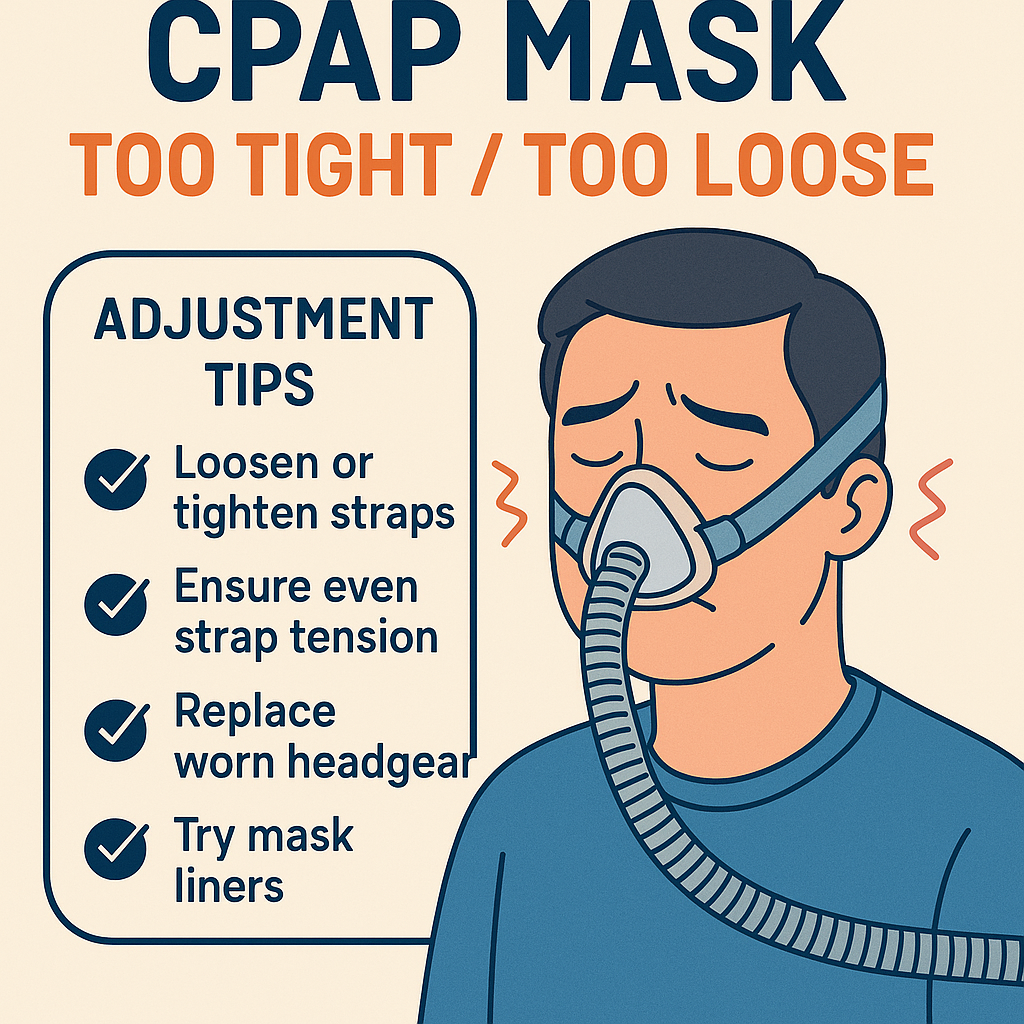
A CPAP mask that’s too tight or too loose is one of the most common problems new users face. Straps that are overtightened cause pain, red marks, and leaks — while loose straps lead to air blowing into your eyes, loud noises, or the mask falling off during sleep.
The good news? Fixing CPAP headgear tension is simple once you understand how the cushion is supposed to seal.
This guide explains why mask straps cause problems — and how to get the perfect fit.
Common Signs Your Mask Is Too Tight
- Red marks or dents on your cheeks or nose bridge
- Skin irritation or pressure soreness
- Worsening leaks (yes — tightening can actually make leaks worse!)
- Mask feels “suctioned” to your face
- Headaches or discomfort when waking up
Common Signs Your Mask Is Too Loose
- Air blowing into your eyes
- Mask shifting when you change positions
- Whistling or hissing from leaks
- Pillow pushes the mask out of place
- Mask falls off during the nigh
1. Let the Cushion Do the Sealing — Not the Straps
Many beginners assume “tighter is better” — but CPAP masks are designed to seal by inflating gently with air pressure.
Fix: Loosen the straps slightly, turn the machine on, and let the cushion inflate naturally against your skin.
Related: How to Stop CPAP Mask Leaks
2. Adjust Straps Evenly on Both sides
Uneven tension causes one side to dig into the skin while the other side leaks.
Fix:
- Adjust each strap in small 1–2 mm increments
- Always adjust both sides of the mask equally
- Make adjustments while lying in your normal sleep position
3. Replace Worn-Out Headgear
Stretched straps can no longer hold the cushion correctly, no matter how much you tighten them.
Fix: Replace headgear every 6 months (or sooner if loose or frayed).
4. Try Mask Liners for Better Grip & Comfort
Mask liners help stabilize the cushion, reduce slipping, and prevent red marks.
5. Improve Fit by Cleaning the Cushion Daily
Face oils make silicone slippery, causing leaks even if the straps are correct.
Fix:
- Wash the cushion daily with mild soap
- Wipe it before bed if your skin is naturally oily
6. Ensure Your Mask Size Is Correct
Many users overtighten their mask simply because it’s the wrong size.
Fix: Use your mask’s sizing guide or try a different cushion size.
7. Switch Pillows to Prevent Mask Shifting
Standard pillows push against the mask, loosening the straps as you move.
Fix: Use a CPAP pillow with side cutouts.
8. Use Hose Management to Stop Tugging
A hose that pulls downward can loosen the mask or create uneven pressure.
Fix: Route the hose above your head using a hose lift.
Quick Summary: How to Fix CPAP Mask Strap Problems
- Don’t overtighten the mask — let the cushion inflate
- Adjust straps evenly
- Replace worn headgear
- Use mask liners to stabilize the seal
- Clean cushions daily
- Check that you have the correct mask size
- Use a CPAP pillow to prevent shifting
- Lift the hose to stop tugging
Common signs your mask is too tight:
-
Pressure marks on the face
-
Headgear digging into skin
-
Leaks around the eyes
Final Thoughts
Strap problems are one of the easiest CPAP issues to fix. With better tension control, fresher headgear, and improved pillow or hose setup, most users achieve a comfortable, leak-free seal within a few nights.
Explore more CPAP comfort guides: