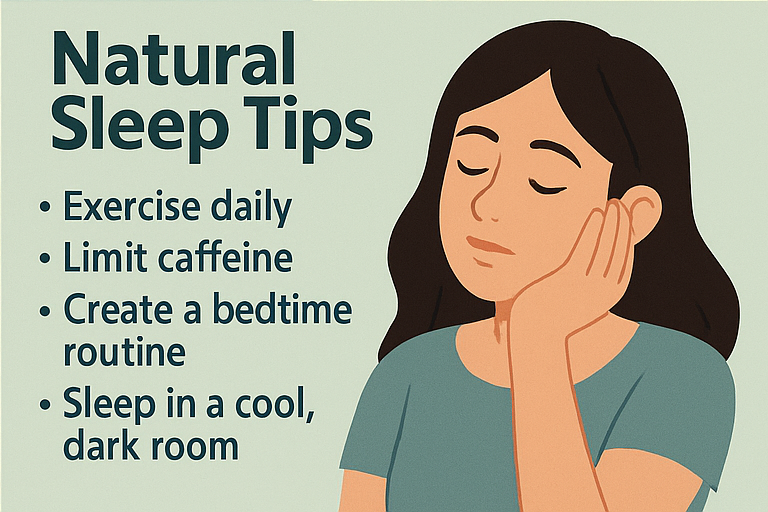
Natural Tips to Improve Sleep Apnea: Simple Lifestyle Changes That Really Help
Sleep apnea isn’t only influenced by anatomy — lifestyle and daily habits play a major role in how severe symptoms become.
While CPAP therapy is the gold standard treatment, many natural approaches can reduce symptoms, improve sleep quality, and make CPAP work even better.
Here are the most effective, science-backed natural tips for improving sleep apnea from home.
1. Improve Your Sleep Position
Your sleeping position strongly affects how easily your airway collapses.
✔ Best position: Side sleeping
Side sleeping reduces tongue collapse and improves airflow.
✔ Worst position: Sleeping on your back
Back sleeping makes the airway more likely to close.
Try this:
Use a body pillow or “tennis ball trick” (taping a soft object to the back of your shirt) to prevent rolling onto your back.
2. Maintain a Healthy Weight (If Applicable)
Extra tissue around the neck and throat increases airway collapse during sleep.
Even modest weight loss (5–10%) can significantly:
Reduce snoring
Improve oxygen levels
Lower apnea severity
This tip doesn’t apply to everyone — many people with sleep apnea are not overweight — but for those who are, weight changes can make a measurable difference.
3. Avoid Alcohol Before Bed
Alcohol relaxes throat muscles and makes airway collapse more likely.
Try to avoid alcohol within 3–4 hours of bedtime to reduce:
Snoring
Apneas
Oxygen drops
Morning grogginess
4. Reduce Sedatives and Sleep Aids (When Possible)
Medications that relax muscles — including many sleep aids — can worsen sleep apnea.
Common examples include:
Benzodiazepines
Certain antihistamines
Some muscle relaxers
Always consult your doctor before stopping any medication.
5. Strengthen the Airway With Simple Oral Exercises
Oropharyngeal exercises strengthen the tongue and throat muscles.
Studies show they can reduce sleep apnea severity by up to 30% in some people.
Examples include:
Pressing your tongue to the roof of your mouth
Repeated swallowing exercises
Balloon inflating
Singing exercises (yes, really!)
Try doing these exercises for 10 minutes per day.
6. Manage Nasal Congestion
Good nasal breathing helps reduce snoring and airway collapse.
Natural ways to improve airflow include:
Saline spray
Nasal rinses (Neti pot)
Moisturizing nasal gels
Humidifier use
Avoiding allergens before bed
If you frequently breathe through your mouth at night, improving nasal airflow can help both CPAP and non-CPAP sleepers.
7. Elevate Your Head While Sleeping
Sleeping with your head elevated reduces pressure on your airway.
Try:
An adjustable bed
A wedge pillow
A higher pillow setup
This can help with snoring, reflux, congestion, and nighttime breathing.
8. Establish a Consistent Sleep Schedule
Irregular sleep patterns can worsen apnea symptoms and increase daytime sleepiness.
Aim for:
A stable bedtime
A consistent wake time
7–9 hours of sleep nightly
Consistency stabilizes breathing patterns and reduces nighttime awakenings.
9. Quit Smoking (If Applicable)
Smoking irritates and inflames the airway, increasing:
Snoring
Congestion
Mucus production
Airway swelling
Even reducing smoking — not just quitting — can improve symptoms.
10. Use a Humidifier to Reduce Dryness and Irritation
Dry air makes the nasal passages swell and become congested.
A room humidifier or CPAP humidifier can improve airflow and reduce nighttime mouth breathing.
11. Consider Positional Therapy Devices
Specialized sleep belts or posture trainers help keep you on your side.
These are especially useful for positional sleep apnea, where symptoms appear mostly when lying on your back.
12. Stay Active During the Day
Regular exercise improves:
Breathing function
Lung capacity
Muscle tone in the upper airway
Body weight regulation
Even 20–30 minutes of walking per day can help.
Final Thoughts
Natural lifestyle changes can’t replace medical treatment, but they can significantly reduce sleep apnea symptoms and improve your overall sleep quality.
For the best results, combine these natural strategies with proper CPAP use (if prescribed).
Together, they help create deeper, more restorative sleep — and better health long-term.